In Northern Mississippi

Playing with poetry, writing from the Delta.

In Northern Mississippi,
folks smile and wave.
They tip their caps
and let you go in front
of them
in line.

In Northern Mississippi,
clouds burst forth
from blue skies
like cotton candy
on sticks of sun-rays.
And when it rains,
it pours,
and dust sticks
in your teeth.

Dogs bark here,
and construction men
grown
in fast Spanish–
I cannot understand–
but I smile to hear it.

In Northern Mississippi,
fears are running out of gas
north of Goodman Road,
losing the state election,
paying higher taxes,
running out of space
for the family
photographs.

“Hi” is “hullo.”
And when you ask me,
“How ya doin?”
I know
you really want to know.

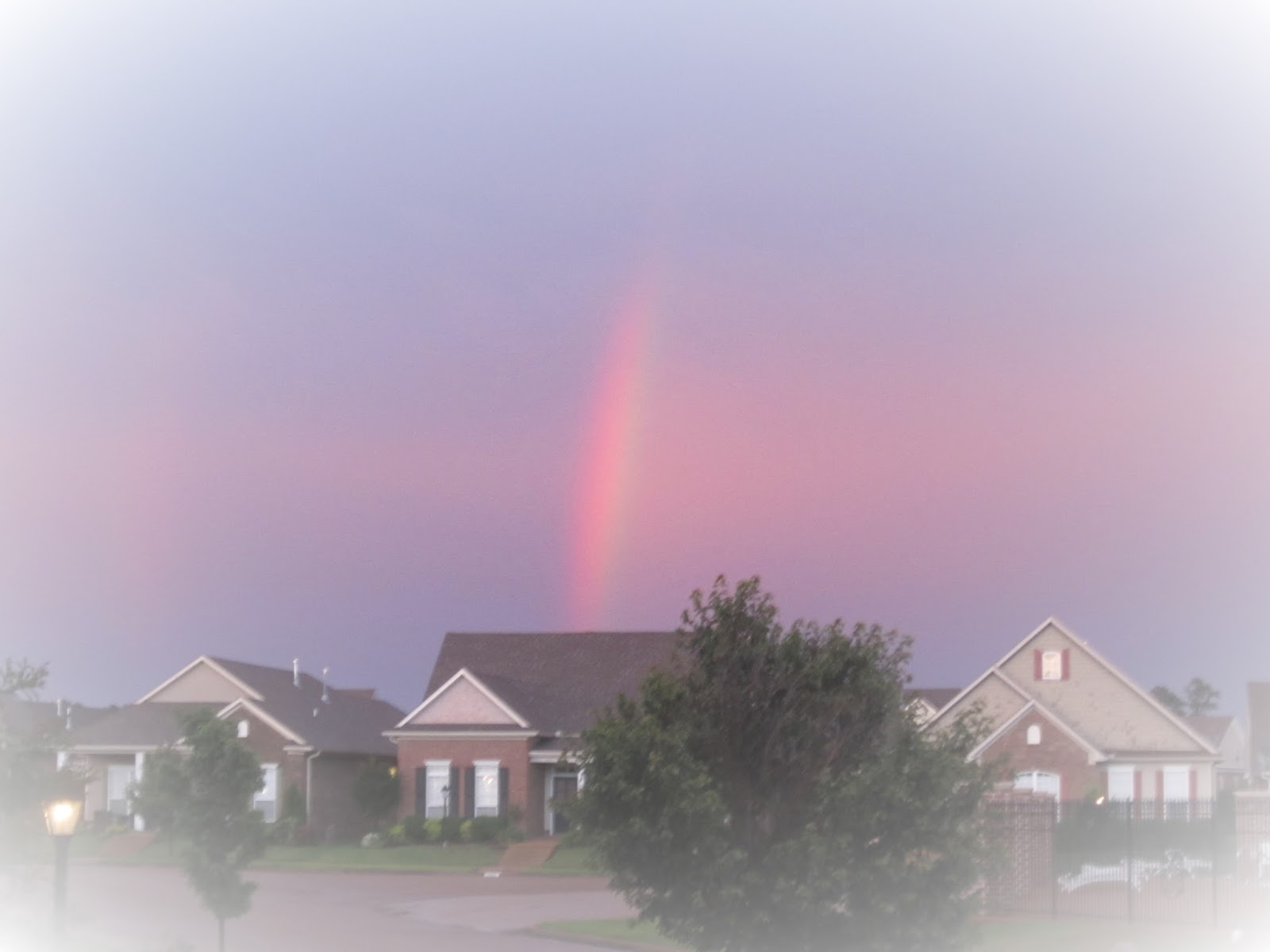
Taken last summer…in Northern Mississippi 🙂

The Sliver Moon

The crescent sliver moon
shines like honey on a silver spoon.
Its bright star shimmers above,
like a sideways
Turkish flag.

Magical Myanmar

Four months later and I’m writing again. There’s a lot to be said and many apologies to be made but for now I’ll say that I’m home in America almost fully recovered from a nasty parasite and spending quality time with family. I don’t plan to return to Thailand, but I don’t think this is the end of my wanderlust. I’d love to give this blog a makeover and write about travelling even while stateside, but I will need a few boot-camp classes in technology first!

Anyway, I want to write about Myanmar. Myanmar is unlike any other place I’ve been, and I think it was the best time I had. Here’s why: it really does make a difference when you give yourself plenty of time to spend in-country (especially if you’re going to buy a visa anyway). I spent nearly three weeks in Myanmar; I could’ve easily spent four, but I hadn’t planned for four so my money was low, and as it turns out, that timing was perfect. I got infected (>.<) the day before I was scheduled to fly back to Bangkok. 
Here’s what I loved about Myanmar: when you start exploring, you start to feel like you’re stepping back in time or into a fantasy world. There is so much natural beauty in that land, and it feels pristine and untouched. Coupled with an unbelievable history and the strong yet gentle spirits of the locals, and I quickly understood why so many people claimed Myanmar as their favorite stop in Southeast Asia. It’s just different. 

Understandably so. Myanmar (formerly Burma) had been closed off since its 1962 military coup and engulfed in civil war and war crimes for the past 60 years. According to Wikipedia, the military junta official “dissolved” in 2011 (the same year that the Lonely Planet guide was published, incidentally), but things had been loosening since the late 2000s. Still, when I went, there were in fact some ATMs and even whispers of Wifi, but nothing as self-serving as the resorts of Thailand. And that is exactly what I wanted.
Hiking the mountains in northern Shan State. Can you spot the tiny dots in the foreground? Those are houses.
In Myanmar, I hiked above the clouds, learned how to spot green tea plants, met the niece of the last Shan princess to rule in Northern Shan state before the military takeover, walked barefoot over sun-soaked marble temple paths, and climbed a lot of pagodas. A lot of pagodas.
One of the several thousand temples left standing in dusty Bagan.
We also did a self-guided city tour of former capital Yangon (Rangoon) where we spotted old mossy-grown British colonial buildings, the famous Strand Hotel, the old Post hub and other relics from a century long occupation.
Old governmental meeting house built under British occupation in Yangon (formerly Rangoon).
I didn’t really want to leave, but my body and my wallet felt otherwise, and so with a heavy heart and a weak stomach I departed Yangon for Bangkok three weeks after I touched down in Mandalay. I took a total of two fifteen hour overnight buses (with varying degrees of comfort), climbed an ungodly number of steps, and drank about seventy-five cups of green tea. Watch the video below to see how villagers in the Pa’Oh mountains in northern Shan State gather and process hundreds of pounds of tea!! (The video turns direction at one point…sorry about that, but trust me, it’s so cool!)
I miss travelling. Until next time, I’ll relish the pictures, the stories, the teacups and the hand-rolled Burmese cigars. Ahh, the simple life!
With love,
Mel

Out of the Frying Pan, Into the Fire: Pakistani Asylum Seekers in Bangkok’s Neighborhoods

Hi friends,

This is a long post, but I encourage you to read to the end. This topic has been weighing on my heart for some time, and I’ve finally put together some information about it. Please read, comment and contact me with any questions or concerns. 

I knew essentially nothing about Pakistan before I came to Thailand. Nor did I think that living in Thailand would teach me anything at all about a country in central Asia for which I had no frame of reference or real concern, or make me care so deeply for a people I had never met.

But God works in mysterious ways.
I began attending a church that ministers to some refugees in the area. I joined a small fellowship group through the church’s network, and one of these families was in my group. I had just moved to Thailand, and I was feeling very lonely. This family saw the loneliness I was carrying inside me, and they invited me over to their home. I went, a bit nervous, but was welcomed with the most genuine Christian love and hospitality I have experienced in many years. It didn’t matter that their home consisted of two small rooms with one big bed on the floor—which they converted into our dining table. They showed great appreciation for my company. In reality, I appreciated their company more than they knew, and I kept going back to sit and visit with them. Sometimes we would sing or play music. Other times we would play chess. Always we laughed and prayed, and there would be delicious food and tea. They told me many stories about their lives back home. They told me of their persecution and how Muslim Extremists had registered the blackened 295-C legal case against them: The Blaspheme Law against the Muslim Prophet Mohammad. In Pakistan, anyone accused of blasphemy receives execution. So the family fled to Bangkok.
In Bangkok today, there are approximately six thousand asylum seekers from Pakistan, most of whom have been accused of violating the Blaspheme Law. They come to Thailand because it is very easy to enter on a tourist visa. However,  as soon as those visas run out, they are regarded as criminals. 
Thailand, to this day, has never signed the UN Commission of Refugees;  this means that every asylum seeker and refugee, regardless of their status under the UNHCR (the UN High Commission on Refugees), is illegal. In the last month, police have arrested hundreds of families and thrown them behind bars. Last week I visited the Immigration Detention Center; the “prisoners” are detained in hot, overcrowded rooms. They are let out to walk around the building only twice a month, and they have extremely limited contact with the outside world. They have no clean drinking water, receive meager meals and very limited medicine. There is a host of diseases inside. It’s a terrible place to be, but for most, it is their only option. The only way out is to be granted refugee status by the United Nations, a process which takes years, or to go back to Pakistan.  There is no choice but to suffer in prison. It is a terrible, terrible place.

Yet despite these struggles, something remarkable is happening. Communities of asylum seekers are uniting to create lives for themselves and their children. They may not be in control of their futures, but they can change their present circumstance, through faith, perseverance, friendship and sharing their stories. And they are doing just that.

 ************************************

Last year, my friend opened a makeshift school in his one room flat for the neighborhood children to learn. The school has grown to reach of 140 children all over the city. A few months ago, I went and taught drama lessons to some of the children. Their enthusiasm, excitement, and sharp wit brought me to tears (not in that room, of course. I had to be cool. They are teenagers, after all.) I miss them. I hope to see them again. I haven’t been back, because the learning center had to shut down. Thai police began patrolling the neighborhood round the clock, and most families were too afraid to send their children outside.

Still, God works through the darkest circumstances. He brought these children out of Pakistan. He has delivered them from incredibly dangerous situations. He has opened four learning centers, one of which was given generously by the wife of a high-ranking Thai army official. The Lord works in miraculous ways.

When I visited the IDC last week I had the honor of meeting other residents of Bangkok who are doing their best to care for the detainees however they can. They work under the constraints of the visitor’s rules and regulations to deliver home cooked meals, diapers, water, food and supplies to as many people as they can.

So why is this so important? Well, being here has showed me with my own unbelieving eyes how powerful prayer is. Most of all, these people need our support and to know we love them and our thinking about them. Even if you don’t pray, just sending some thoughts, or talking to a friend who may not know what’s going on, can do tremendous things to alleviate the suffering of people who feel so alone. And somehow, I feel like I’m here to help.

************************************

For more information about the situation, I recommend the following articles:

http://bigstory.ap.org/article/907aad6cecba463794926748e1fb4369/stuck-limbo-bangkoks-hidden-urban-refugees-scrape

http://farrukhsaif.com/crack-down-against-pakistani-asylum-seekers-in-bangkok-thailand/

http://liferaftinternational.org/about-us/the-situation-in-bangkok

With Love,
Mel

Being ‘Miss Rumphius’

Glacier National Park and environs Gardens in front of East Glacier Lodge.
lupine flowers in full bloom

I’m not a parent, so I can’t say much about what makes “good parenting,” but I can tell you this: we read so many books as kids, and those books, with their poetry and pictures, still stick like stamps firmly in my mind.

The picture books especially remain close to my heart. Perhaps this is why I am a visual learner. Or, maybe I remember these books because I was too young to stay up late listening to my dad read The Hobbit to my older siblings. I still listened through the wall between my bedroom and the living room, but again, only pictures of scenes remain in my mind from that time.

There were many whose watercolors captivated me. My mother would read these books to me at bedtime, and I would half-listen as I lost myself in a sea of soft pastels. The books of Barbara Berger: Grandfather Twilight, When the Sun Rose, and The Donkey’s Dream were three of my regular favorites.  I loved falling asleep, dreaming of beautiful twilights and sunrises and friendships and visits. Thanks, Mrs. Berger, for giving me sweet dreams 🙂

A page from Grandfather Twilight, by Barbara Berger. (Philomel Books, NY, 1984).

But perhaps one of my very favorite childhood books, one that, as an adult, I find myself going back to in my mind again and again, is Barbara Cooney’s Miss Rumphius.

Miss Rumphius has a more involved plot than Berger’s books, and the main character’s journey along with the pictures, still captivates my heart.

The story is about a little girl who grows up and travels the world.

As a child, travelling far from home was never something I thought I could do; not because I was not capable, but I just didn’t think it was real. The places I read about in Miss Rumphius seemed like wonderful fantasies to me, like The Shire in Tolkein’s The Hobbit.

When I first moved to Israel, I felt this same captivation with every step I took. Every rock, every tree, every bus stop and plant and bowl of hummus was unique, precious, and undeniably extraordinary. Israel felt like a present God had given me to step outside of my own skin and into the pages of my favorite adventure story.

Of course, the unpleasant realities of politics and social clashes brought me out of that dream bubble, and I struggled with this clashing of my dreams and my reality the whole five and a half months I was there. But that’s a different story…

I always admired Miss Rumphius, not because she traveled, but because travel was not her ultimate goal. Miss Rumphius, in my opinion, was the first real backpacker. In the story, she hikes the Himalayas with a guide, rides camels in Egypt to the pyramids, and meets a local village elder on some tropical beach, somewhere in the world. She didn’t just lie on a beach getting seriously suntanned for two weeks and then go home (guilty as charged).

A page from Miss Rumphius, by Barbara Cooney. Viking Books, 1982. The house on stilts in the background resembles traditional homes in many parts of the world today.

Don’t get me wrong–every once and a while, relaxing on a beach for a week in the sun can be a glorious thing. But my point is that all these places she visited, people she met, and adventures she had were real. They were not fantasies. They were very real experiences that await many travelers today. But there’s something about her poise and grace that always fascinated me. Maybe it had to with the fact that she rode that camel side saddle and wearing a girdle. (Did I forget to mention that the book is set a century ago?) Or maybe, as a woman in 1915, it would have been nearly impossible for her to do what she did. But in the book, she did it. And she did by her own fortitude.

Yet, she also had the wisdom to come back to her own corner of the world after her travels were finished. In the story, Miss Rumphius becomes a librarian (probably yet another reason why I love this book).

And then she grows old.  And she lives in a house by the sea.

But before she passes away, she has something left to do. In the story, her grandfather told Miss Rumphius these words as a little girl:

You must do something to make the world more beautiful.

So she does. She rides her bike through her little seaside town and scatters lupine seeds everywhere, so that, come next spring, fields of lupine flowers suddenly spring up all over town.

Have you ever seen lupine flowers?

I love them, because they are wild and free and vibrant. Just like Miss Rumphius.

 Miss Rumphius, by Barbara Cooney. Viking Books, 1982.