The Time Has Come (The Walrus Said) to talk about Home Sickness

It’s finally happened.

I’m homesick.

The feeling has been creeping on slowly like a cold for the past few weeks.

I’ve been trying my best to combat it. I’m taking regular doses of social events, drinking lots of classroom prep, and getting at least 8 hours of Thai commuting a night, but still, even through preventative medicine, I’m homesick.

I know I shouldn’t be. I have regular access to the internet, Skype, Whatsapp, and I’m sending postcards. But frankly, I’m beginning to wonder if my internet addiction is actually fueling my homesickness. I’ve noticed in the past few weeks that I’m spending more time in my apartment with my face glued to facebook or gmail or even the Huffington Post than outside making new friends. Today I saw an issue of TIME magazine for the first time since being here, and I gobbled it down like a sickly sweet dessert. To be honest, making friends takes work, even in one’s home country, and sometimes I just don’t feel like expending the energy to talk with more people. Some days, I’m really talked out.

Additionally, being here has made me much more aware of my Western-ness. I’m an English speaker, I thought to myself today, and that categorizes me in the eyes of so many people, most of whom are not (native) English speakers. Today, for example, I received this well intentioned but unsolicited advice from a fellow (Thai) teacher while grabbing a juice in between classes:

Be careful. Don’t go outside alone, because you know, Thai people, they kill foreigners.

I smiled politely and paid for my drink. Then I left, feeling confused as to whether that was a warning or a threat.

Things like this happen all the time–not quite to that extreme (and by the way, my experience with Thai people so far couldn’t be further from this apparent “truth”), but I’m often singled out for my foreignness. Most of the time I just laugh it off, but deep down, sometimes it gets to me that I’m judged for my appearance without people bothering to talk to me first.

Then of course, there is the whole language barrier thing. Suddenly, everything I studied in my history classes makes sense. On the one hand, I’m very grateful for the opportunity to feel like I don’t belong. In this day and age, with migration and immigration and asylum seeking abounding, I can’t imagine how confused and scared and misplaced refugees, migrants and immigrants must feel in any country other than their own. And on the other hand, sometimes it’s just plain irritating.

But I’m learning a lot. For instance, I know that I can successfully direct a taxi driver to my given address with the help of a GPS and a rudimentary knowledge of Thai direction words. I know that Thai people smile in all sorts of situations that I would normally find confrontational or irrational. And I know that when the power goes out, there’s nothing you can do but pray by the light of your cellphone.

But I’m still not really getting it yet. There’s still a million things about Thailand’s bureaucracy that don’t make sense to me, and I wonder if they make sense to anyone else either. And I still marvel at how the sky can just open up and pour rain sideways until the roads start to smell of sewage.

All this, and I’m only on month two.

I’m trying to find a way to wrap this up, but I’m not finished yet. I’m struggling to give myself encouraging words. How do you deal with homesickness? Does it help to talk to your family more or less? Does it help to get out in the real world, close the laptop, and go make a new friend?

Or does it help just to get a good night’s sleep?

I’d really love to know. For now, I’m looking forward to the upcoming break; hopefully I’ll finally get to go exploring.

Mel

"They Have Pizza in Thailand?"

In trying to convince my parents that I am living comfortably as a teacher in Thailand, I’ve been telling them all the familiar things. “Yesterday, I went shopping. I bought linens, and I had pizza for dinner with friends.”

“Really? They have pizza in Thailand?”

They do indeed.

But make no mistake about it; I am in a foreign country, and with that come many highs and lows. I feel so comfortable at church, speaking English with my friends, and yet as soon as I enter a van I am dropped down to the level of humility it takes to remind me that my language is like that of a baby. The little girl who collects the money tells me to sit in the back, where there is room. I know this by the nod of her little head, not by the words she speaks; those I cannot yet understand. “Abac Bangna?” I ask her. “Yee-sip hah,” she responds. Twenty five baht. I pay my fee and scoot to the back of the crowded van with my many bags of groceries, linens, and leftover street food; my spoils from the weekend. And yet I was too focused on making it to the right bus stop to remember that I had extra food in hand, and perhaps the homeless man curled up on the street corner might like it. I gave him my peanuts, but I forgot that I had more to give.

I always have more to give, and yet I always feel like I am not enough. I grew up thinking this way about God, too. No matter what I do, I can never be a good enough Christian. I can never make God love me enough, because I constantly fall short of His will. But in thinking this way, this dangerous mind game that the devil likes to play, I forgot that I have already been redeemed. He already loves me, no matter what.

That love comes and goes in Thailand, like it does in any place. We tie our love in with our expectations of good grades, praise and recognition for our worldly achievements. I tie my self-worth to my ability to be a good teacher, a good person, a good daughter and sister and friend. I am never enough.

But I am enough. I am enough, sitting here on my patio. My little bedroom is enough, situated here in Abac’s campus. And living in Thailand is enough.

They have pizza in Thailand. They have soda and hamburgers and Iphone 6’s (on pre-order). They have Bible studies–Thailand is remarkably accepting of other religions, unlike some other places I have lived. Thailand is enough.

Yet Thailand is still growing in many ways, and I am growing along side it. Maybe our relationship will only be temporary, but I will love it and love my time here in whatever capacity God gives me. I will not be perfect. But if I could be, I wouldn’t need God.

And then I never would have come here in the first place.

I am not enough without God. But with him, I am everything because He is everything. When He is in me, I am enough, through the mispronunciations and the mistakes and the stress. I am enough because God made me. And He will always be enough.

Tonight I’m feeling grateful for religious freedom; it’s a rarity in many, many places. I am vexed by more things than I understand, but perhaps I should also be grateful for the simple pleasures, like sun shining on freshly fallen snow. They certainly don’t have that in Thailand 🙂 But if God made the whole world the same, no one would feel compelled to travel, would they?

One Month In: A Short Picture Book and Musings on Language Learning

This is my life right now…

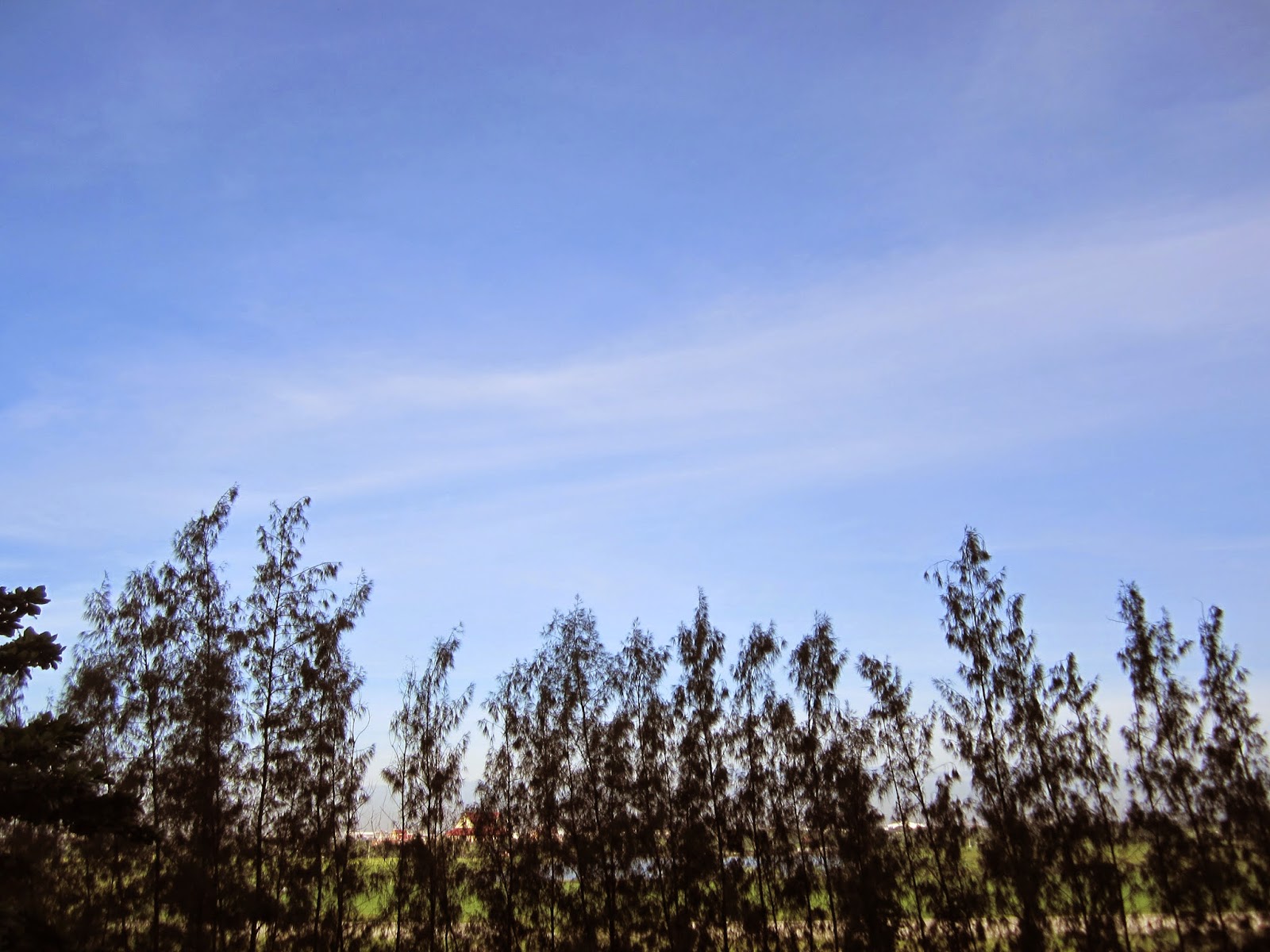
Every morning I wake up at seven thirty to go to work. But it’s okay, because I wake up to this…

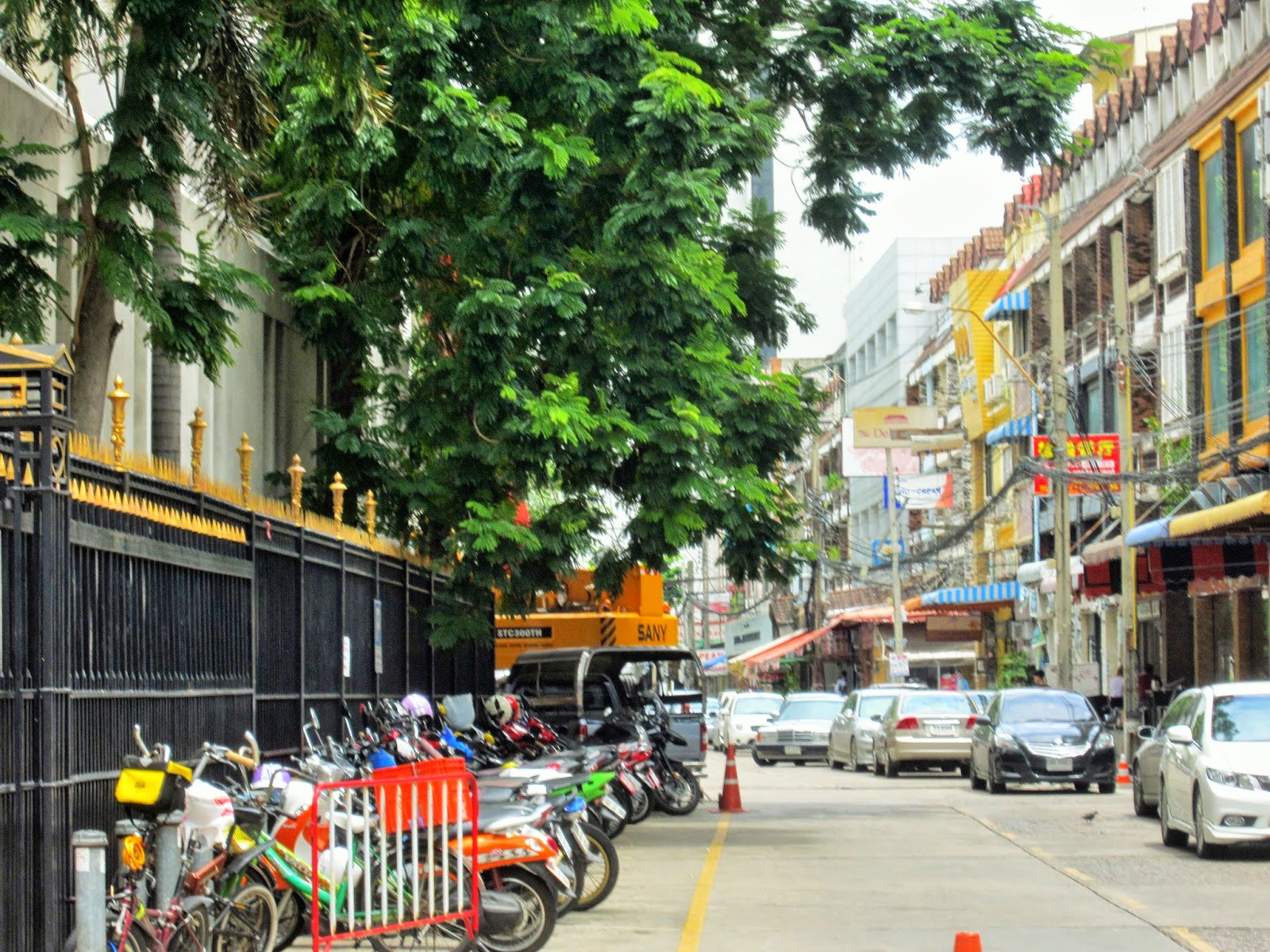
I teach outside of the city, but it’s okay because I like the quiet. When I’m anxious for culture, I can go here


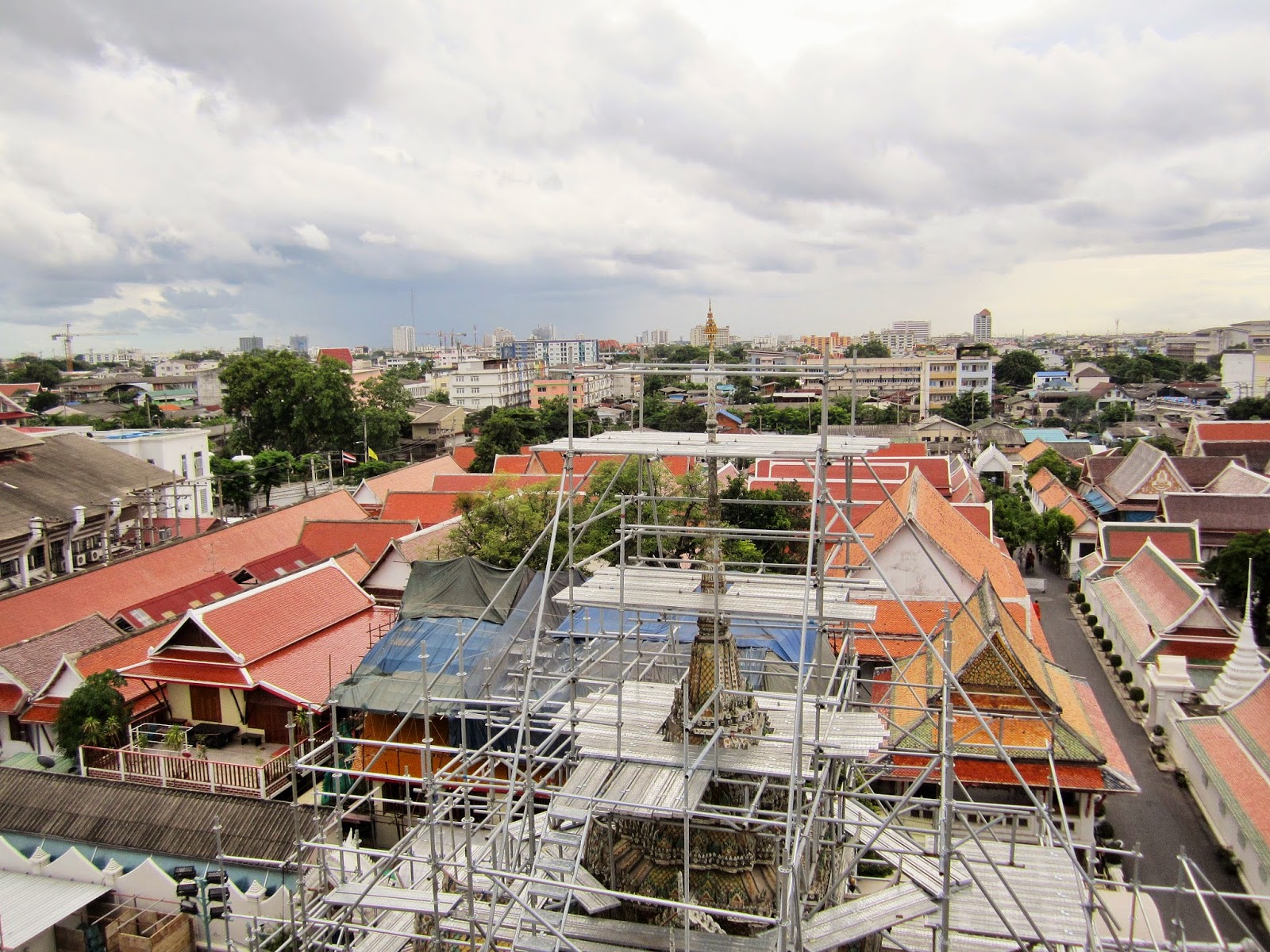
Or see this.


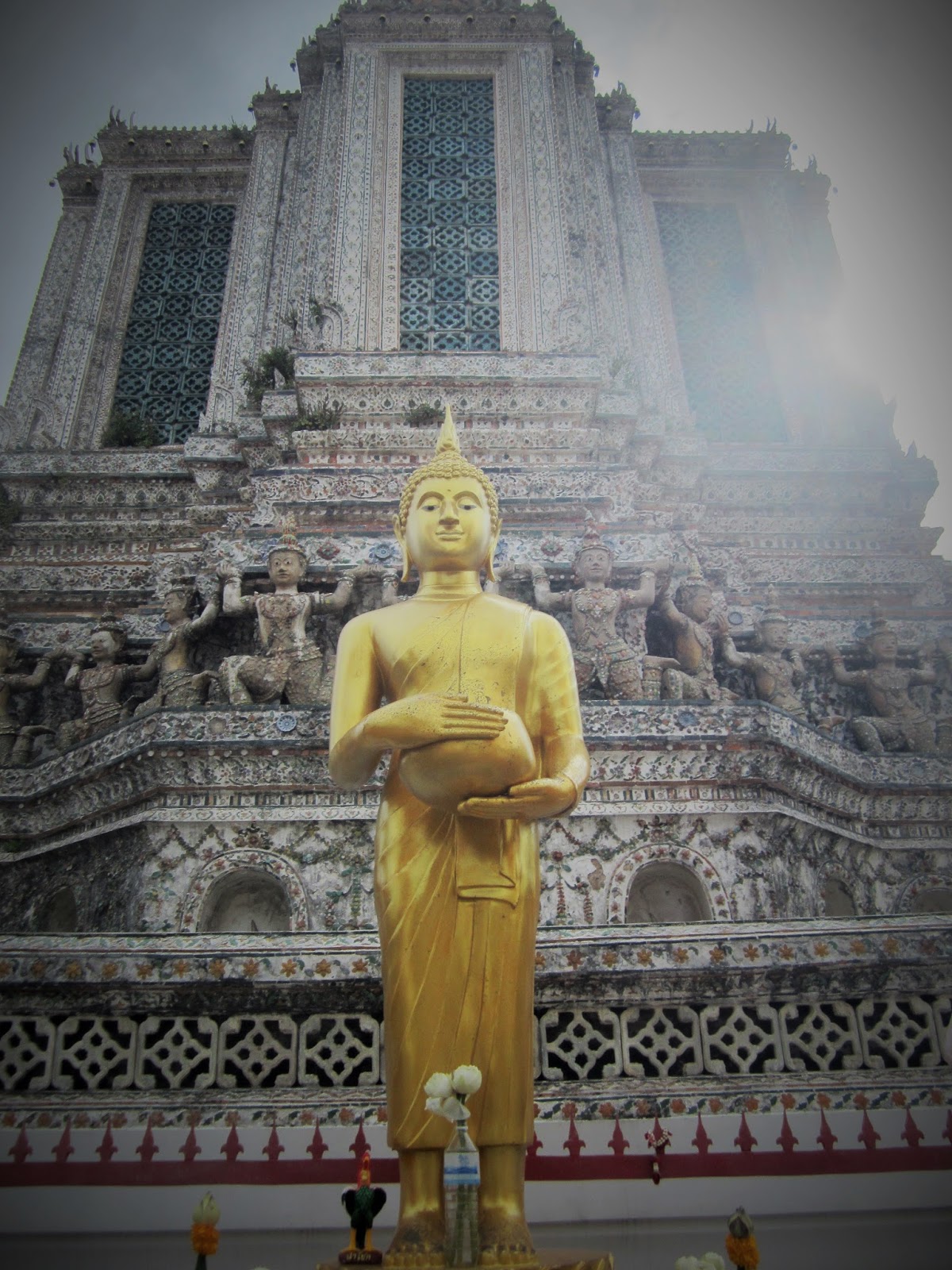
I get lost amid statues,


pay respects on the way,
 
 
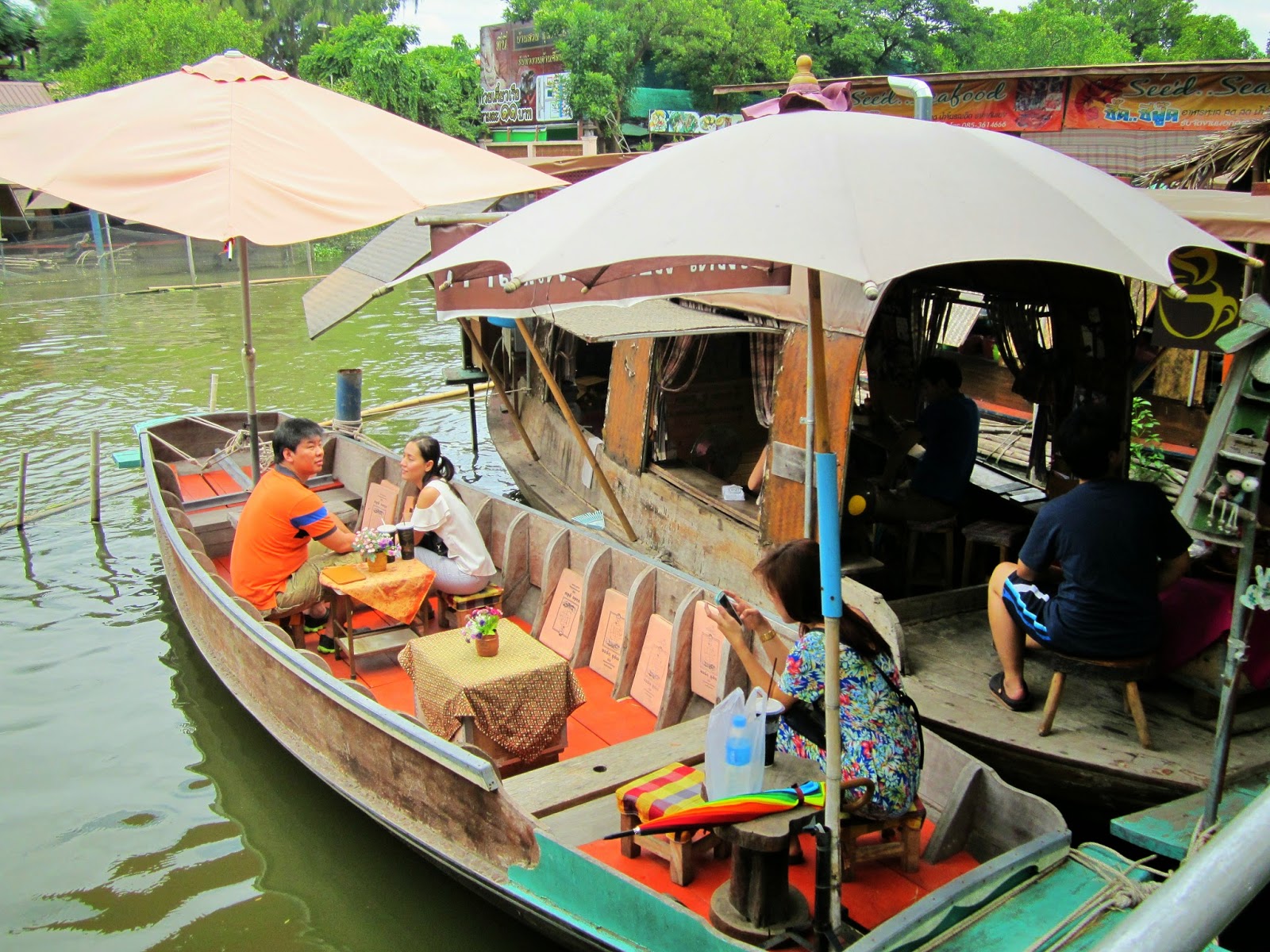
have lunch on a boat dock
 
 
or buy jars made from clay.
 
 
If I need a reminder of why I came so far away from home, I find it in God’s simple pleasures, like a mooncake, a coconut, or a trip to Silom.


Of course life isn’t like this every day. This pictures were taken almost a month ago. I’m going on week four of teaching, and that is an adventure in itself! But I needed a reminder this morning of just how magnificent Thai culture really is. You can never boil it down to little quips and phrases, and I refuse to do so. To try to understand Thai culture from the perspective of a foreigner, a “farang,” is like trying to guess the color of a fruit flesh’s without peeling the skin. It’s impossible to know.  Thailand has a huge tourism industry; everywhere I go I see tourists, mostly Westerners. Bangkok has a massive ex-pat retiree community and many more sex tourists. (For more information on the sex trade in Thailand, go here.) One of the biggest complaints I hear is that Thai people don’t understand Westerners. For English teachers like me, it can be frustrating trying to communicate in a language that many people don’t understand or seem motivated to learn. Indeed, Thailand is ranked near the bottom of Southeast Asian countries for English speaking ability. Many are concerned about the effects this will have on Thailand and its economy with the launch of the Asean Economic Community (AEC) incentive in 2015. After all, the official language of Asean will be English–not so much to communicate with the Western world, but to communicate with each other. Isn’t it curious that English is becoming the common language of the Asian world?
 
I could go on and on about the sociocultural implications of a world gone mad with English fever. For a wonderful Ted talk on the subject, click here. But the fact still remains that millions of Thais speak little to no English in an economy increasingly reliant on foreign (mostly English-speaking) tourism.
 
So should they learn?
 
Many of my students are here because they want to take over a family business, work in tourism or work with foreigners, and they know English will allow them to get there. But my students–university students in general–area small percentage of the population, most of which exists in the rural provinces of the country.  I know nothing about the schooling system in Thailand, except that it is compulsory. I do not know the level of English language teaching in the school system. But classes are obviously conducted in Thai–the native language to so many.
 
Which leads me back to the question: should Thai people learn English to communicate with foreigners or for international business? For the latter, perhaps, but I’ll skip that debate for now. How about the former: foreigners? Tourists? Visiting English professors?
 
Or should we learn Thai? Wouldn’t that be more helpful?
 
Or maybe a little of both?
 
So much upset in one’s daily life–regardless of location–comes from miscommunications that get blown out of proportion. It seems to me that this can be easily remedied through language learning, not just Thai speakers learning English, but English speakers learning Thai (like myself). I feel frustrated when I can’t connect more deeply with someone because of a language barrier. This is something I want to change. But I think there needs to be more emphasis on language learning, as opposed to just English language learning. If language learning is one-sided, there can be no cultural exchange, only cultural domination. This is not what the world needs.
 
My goal for this year, before I arrived, was to learn how to be a teacher. I am learning, but I’m realizing that building relationships with my students–and anyone else from Thailand, for that matter–requires more work on my part, because I have to find ways to put myself in their shoes…and their sandals 🙂
 
I think learning language is a beautiful way to do that.


Chapter One: A Very Slow Start to a Very Long Year

The first week of teaching is over. The second week of teaching has just begun.  I write happily from the comfort of my apartment in my pajamas–this is my day off.

The first week was everything: exhilarating, terrifying, irritating, rewarding, and (literally) nauseating. I teach nineteen and a half hours a week.  While I thought that was completely normal, even a bit easy (given that most full time American jobs in the professional world run anywhere form forty to eighty hours in a week), I quickly realized that nineteen and a half hours of teaching really means nineteen and half hours of performing stand-up comedy routines. And that’s exhausting.

In many ways I think I came to immortalize teaching much as I used to immortalize acting (which I find rather hilarious, since I’m starting to see so many similarities between the two jobs). I convinced myself over the last year that teaching was one of the most noble professions a person could pursue and that therefore, I should do it. I convinced myself of this so that I would feel better about moving to a corner of this globe I barely knew existed. Of course, I still do (and always will) believe that teaching is a very noble profession. I probably wouldn’t be alive today if it weren’t for my teachers. I mean that. But being noble doesn’t necessarily mean that you aren’t plagued with doubt, fear, irritation, and those pesky little calls of nature that you just can’t answer because you’re already late to your next class and it’s twenty minutes away on the second floor of a building that doesn’t have stairs.

(Deep breath).

This past week, as I bulldozed my way through seas of giggly students, I began to feel a change in my own skin. First of all, I knew that I was being watched. It’s impossible to avoid being seen, because students wear uniforms and teachers do not. If you’re not in uniform, you’re a teacher, and everybody knows it.

I never thought I would be cursing self expression!

I’ve always, always tried to blend in with the crowd, to avoid feeling put on the spot and to be able to watch life unfold from the safety of the wallpaper. But now I feel like I’m suddenly in the hot, bright spotlight–and I’ve only been teaching for a week of my life.

My dream is to use this awkward position of authority to my advantage–not to self-aggrandize myself, but to catalyze the respect teachers are supposedly garnered into challenging my students further in the classroom. Ok…but how?

I’m torn halfway between wanting to throw myself full-heartedly into this profession and wanting to lace up my boots, grab a backpack and hit the road.

I’ll go ahead and say it: it is not easy working in a foreign country. Nothing makes sense to me. The bureaucracy of Thailand isn’t my bureaucracy, so instead of brushing it off as “typical,” I get more and more frustrated. Every day I get more blank stares from students who would rather be on their cell phones or shopping at the mall than sitting in my classroom listening to me explain non-countable nouns.

What the hell are non-countable nouns, anyway???

Maybe I would be less frustrated if I had indeed finished an English as a Second Language training course. That’s probably what any logical, foreword-thinking person would do. But part of me thinks that no matter how “prepared” you are for a job, nothing can prepare you for getting smacked in the face by the unpredictability of human beings. Whether they are above or below you in “rank” (which is very big here in Thailand), human beings are just as messy, confused, and wanting to be loved as you.

If only I could hug everyone instead of having to smile politely and say “kap kun ma ka” for God only knows what.