Blog

The RN6

The Route National 6 goes from Maevatanana in the Northwestern part of Madagascar all the way up to Diego Suarez, the port city that is the northern most tip of the country. The drive from Maevatanana to Diego can take up to two days, depending on how long you stop, if you’re driving at night (not always recommended) and if there are a lot of freight trucks in front of you.

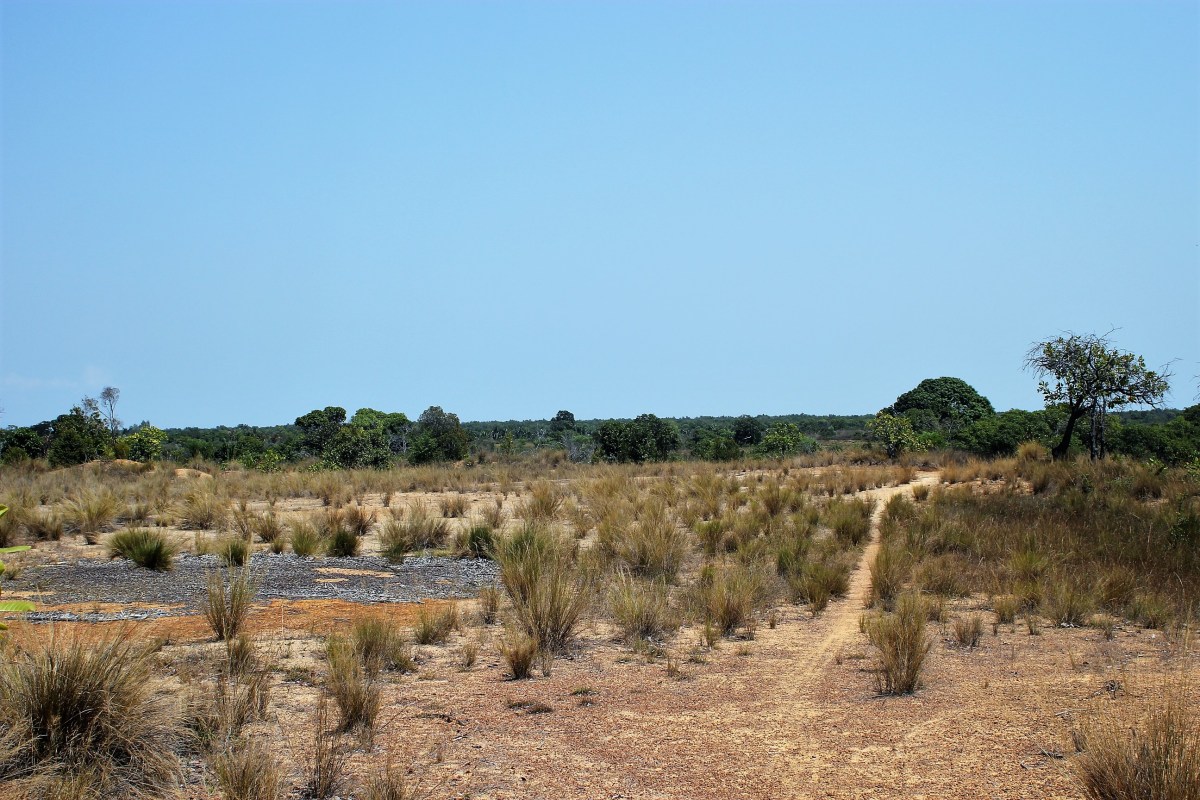
I made this drive with four other education volunteers, two Peace Corps drivers, and staff, almost two months ago, after I completed training and was sworn in as an official Volunteer. We departed from Tana early Saturday morning, September 9, with all our belongings stuffed in the back and on top of the jeeps. After spending most of the day winding up and around harrowing cliffs, the road begins to flatten. The mountains suddenly disappear. In their place appears flat, wide prairies as far as the eye can see, prairies that rise to greet the horizon with a whisper of “I feel your silence. I’ve been watching you for a hundred thousand years.” I’m speechless. What do I have that can measure up against the breadth of the Malagasy landscape?
 

IMG_0009.JPG
View from the Road


And just like that, new mountains appear like scraggly Hershey’s kisses, peppered with tall, magnanimous Ravinala: the national tree of Madagascar. The Ravinala tree stands tall and proud, its crazy palms spread wide like a male peacock during mating season. In the foreground, the trees become plentiful and the forest thickens with palms and banana trees. The dirt turns to sand, and I am home.
 

21616274_1433239426797443_3189769897591854530_n.jpg
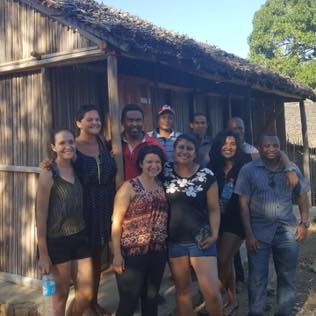
The northern crew in front of my new Ravinala house.


Perhaps my favorite experience with the glorious RN6 so far are the long bike rides I’ve taken down its flat, paved, sometimes windy and always interesting path. Peace Corps issues every Madagascar volunteer a bicycle, because so many roads are in poor condition and public transportation can often be a hassle. I knew this from the beginning of training. I also knew that I hadn’t ridden a bike since being knocked off mine by a moving vehicle last year. I was a bit anxious.

Still, I don’t like to run away from challenges, especially ones that I believe I can overcome. I had a bike. I had a path. I had a helmet. And I had an abundance of time. It was a simple enough conclusion to draw: I was going to ride.

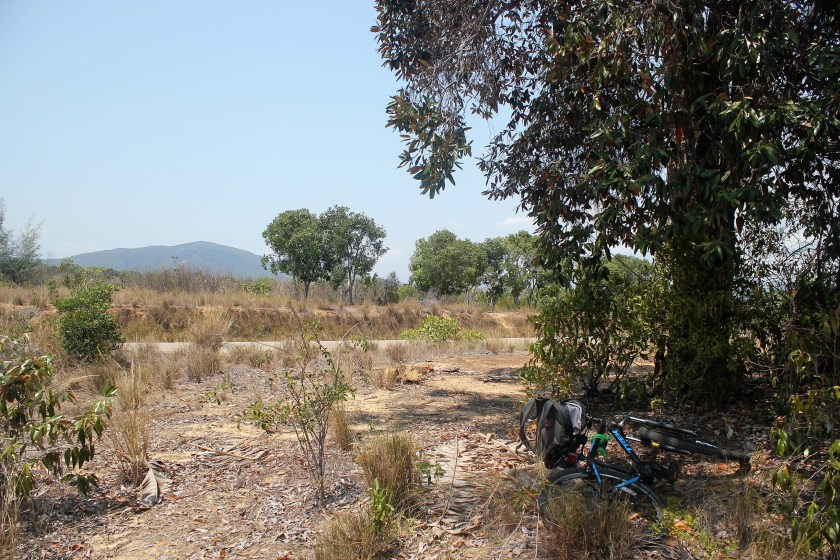
So I woke early one morning, lathered myself with sunscreen, and left my little Ravinala house behind. I mounted my bike and pushed away from the tarmac. The peddling came back easily, to my delight, like an old dance. The seat adjustment took a bit of time, as did figuring out the gears and learning how to navigate pedestrians, ox carts, public vans, big trucks and narrow bridges. But despite all these distractions, there were still stretches of my journey where I was completely alone: just me and the RN6. Mountains rose to shelter me on either side; I passed rice fields, banana fields, neighborhoods full of Ravinala houses like mine, kids eating mangoes, people sitting in the shade, pelicans eating fish from rivers. I’ve never seen anything like it, and I can’t quite describe it. I don’t have the vocabulary.
IMG_0010
Resting in a patch of shade

But there were moments where I’d look up to the sky, feel the weight and breadth of the air surrounding me and think, is this really my life?


Moving to Site: Adjustments

The lack of structure is both terrifying and liberating. I’m not used to blogging my hand (I wrote this and all the following posts in a big lined notebook), but this is how it’s going to be. When I signed up for Madagascar, it’s true that I had no idea what I was in for. I had ideas of my own, based on past experiences. Comparison is the thief of joy. Was it Shakespeare who said that? Anyway, I believe it. I’ve been constantly humbled every day, every moment, by how little I understand and how small I truly am. But most of all, I am constantly surprised by how incapable I feel–the skills I’ve learned in my life, the things I put on my resume when I applied to Peace Corps, the things I thought made me who I am, seem completely irrelevant out here. Maybe they never will be…at least not in the way I expected. Share your skills, adapt them and learn new skills as needed. That’s one of our Core Expectations as volunteers.


21616274_1433239426797443_3189769897591854530_n
my installation team and local counterparts on the day I moved in to my new house

I define myself by my successes and my failures in my work. I measure my life and my worth that way; I always have. It seems that in America, people are only as good as the things or ideas they produce. This, admittedly, is one reason I feel the need to continue blogging. I feel the constant need to have my ideas heard and listened to and criticized and critiqued and challenged. That is how I am used to functioning in the world.

But imagine a place where your value is not questioned or measured against your productivity, a place where you exist, you are acknowledged, and therefore—you belong.

Welcome to Madagascar.

On the Eve of Swearing-in as a Peace Corps Volunteer

This post was written September 7, 2017

It’s hard to believe that only three months ago I left Memphis with two suitcases almost as tall as me. I remember sobbing all the way through security (which wasn’t that long, because it’s Memphis) and waving goodbye to my dad…that was heartbreaking. Fast-forward to last month when I got sick and had to leave my training site in Montasoa to go see the PC doctors in Tana. I called my dad over WhatsApp and told him the truth (my sickness was minor, but my fear was major). I sobbed again and said, for the first time,

“What if I can’t actually do this?”

I don’t like feeling afraid. It makes me think I’m weak, and feeling weak to me means feeling helpless, which means I have to reach out to people when I’m in trouble, which I fundamentally despise. I know that this is my own pride, wanting so desperately to be good at everything and have all the answers and never have to rely on anyone else to get me there.  In training we talked a lot about the courage to show up and be vulnerable, to admit that you don’t have all the answers but you are willing to try.

I’ve tried so hard to be independent and fearless, yet now that I’ve come into the world of global development with Peace Corps, I’m starting to realize this very important truth: development relies on collaboration. And not just collaboration on projects or budgets or lesson plans; it requires whole-hearted, empathetic, humanitarian collaboration. It means having the courage to look someone in the face and say, “I see you. I am here. Let us work together.”

That means being messy. That means being wrong. That means letting others see your weaknesses so that you can say “this didn’t work. Let’s try again.” And then have the courage to try again and again and again.

From Memphis to Montasoa, these past three months of Pre-Service training have been so intense: emotionally, physically, and intellectually. It’s difficult to put into words exactly how I feel on the eve of Swear-In because I frankly haven’t had enough time to think about it. Sometimes the language, the training, the constant input makes it impossible for me to think about anything other than the immediate moment: communicate effectively, plan the lesson, eat the beans and rice, walk over the bumps in the road to get to class. It’s almost like being on autopilot.

I’ve heard from other volunteers that PST is the hardest part. You have to give up a lot of autonomy and trust an organization that you barely know, staff you’ve barely met, and function mostly in a language that is not your own. But despite all these odds, I am terribly excited to install and I’m so excited to be a Peace Corps volunteer. It’s the mess that I like…though I know that as volunteers we are held to a high standard of conduct and appearance…the mess is all around us. And in this mess is where we find the beauty.

IMG_4324
Pre-Service Training hike to the top of the cell tower in Montasoa


Chapter One: The Beginning

Where else can I begin? I wriggled myself free from the rusty leather seat of the tax-brousse and spilled out onto the paved asphalt road. I looked down at my feet, unaware of how swollen they’d become from twenty four hours in the van. The road from Tana to Ambilobe is paved, which is an enormous blessing, but the road is narrow and windy and there is only one way. If you get stuck behind a freight truck, you have to pass it or move to the side, and if the tires need changing, which they always do, you have to stop on the side of the road to do it. That normally happens in the middle of the night right after you’ve finally managed to nod off.

So when I arrived in my new hometown, I was extremely tired and a little bit sore, and I stood on the pavement outside the brosse as people and colors swarmed around me and our driver unloaded our bags from underneath the seats and above the van on the roof, previously secured under blue tarp with some rope. I barely have enough time to look up before people are smiling at me and talking to me, but at that moment it only sounded like noise. I handed my sleeping to a tall woman with a kind face a broad smile and followed her away from the road. The crowd has steadily grown, and one man starts shouting to everyone that, “look! A foreigner has come here and she doesn’t understand Malagasy.” I turned around and, with my best stern face and practiced accent say, “Of course I understand Malagasy,” and his eyes went big and then he started laughing. If we were playing a game, I’m not sure whether I won it.

I followed the trail of people and baggage down the side road and onto a sandy path that revealed my home for the next ten days.

It’s hot in my new town. Thankfully my host sister, the one with the big smile and the kind face, hands me a bucket of water immediately and says, “go, shower.” Who knew something so small could be so sweet? The shower was outside and built out of bamboo leaves and immediately made me think of the 1960s movie version of South Pacific, that scene where Mary Martin is washing her hair on the beach. I know I’m not in a movie, but sometimes I like to pretend, because everything feels so foreign anyway.

Karibo,” my host sister,  Nasy, says to me after I finish my shower. “Come in and eat.” I sit down cross-legged on the bamboo mat and dig in to a plate of milky white rice, vegetables and fish. She stares at me…I’m not sure what she is looking for. She starts talking and my ears begin to buzz; I cannot keep up with the flood of loud, boisterous language coming towards me, punctuated with whoops and whistles and exaggerated vowels and syllables. It’s nothing like the way people speak in Tana, in the highlands, where I’d been training. And neither is Nasy. When she smiles and laughs, her whole body shakes, a deep, rich laugh that echoes through the compound. When she hears music coming from a neighbor’s house (which always happens), she begins to dance like she is keeping a secret and wants to make you guess what it is. She is not timid. I see no fear in her. But then again, I barely know her.