Blog

A New Story to Tell

Preface

I don’t consider myself a great storyteller, but I want to be. Those who are wise and observant, nonjudgmental and painstakingly descriptive are the great writers with whom I am enraptured. I’ve never understood my impulse to write and paint pages with sound and letters, but, here it is. Often I feel the urge to write because something is boiling inside me, and I can’t find any other way to let out the steam. I consider this urge a weakness; I lack discipline. But what I do have is autonomy; the will to write what I want, however I want to write it. This brings me back to storytelling.

I believe everyone has their own unique, beautiful story—some stories are more often told than others. When one walks down the street, one sees only fragments of a beautiful story: the sides of faces, whisps of smile or furrowed brow, tufts of soft or graying or mussy hair, painted fingernails or steel-toed boots, gaps in smiles, missing teeth. These fragments tell a greater story of a life lived whole.

There are seven and a half billion people on this planet. How many lifetimes would it take to write the story—the complete story—of every single one of us?

Author and feminist Chimamanda Ngozi Adiche gave a remarkable speech that the calls “The Danger of a Single Story.” I invite you to watch it below (and then continue reading!)

So what does any of this have to do with Peace Corps? A lot.

Last week I visited my site—a small, quite village in northern Madagascar where I will be stationed as an English education volunteer for the next two years, starting in September. I was there for ten days, and around day five, I felt just about ready to pull my hair out.

“What do people do all day?” I thought to myself. “Why does everyone feel the need to say things to me that are so obviously apparent…like asking me if I’m walking when I am clearly walking. And why do people invite me to do things and then not show up to them? Why, why, why???”

Ah, but the sky is so big here, and the stars are so bright.

“Yes, but do they realize it?”

Are you aware of all the lines on your own palms? Their curves and features?

I started counting down the days until I could return to the Peace Corps Training Center and complain, in the company of other Americans, in sweet, sweet English, about how ridiculous everything is and how difficult and how nothing made sense, how I felt neglected and ignored and sad and confused, and that, and that, and that…

And then I went for a jog around the school track in the evening, and I saw a mountain in the distance. And I wondered if anyone had ever climbed it, all the way to the top. And then I looked down at Fardo, the ten year old boy jogging happily beside me, teasing me, urging me to run faster, faster, faster.

And I felt so ashamed.

IMG_4256

I thought about the promise I had made to myself state-side to come in with no expectations, to not to be self-righteous, and to be a learner. I hadn’t been doing that at all. I’d been afraid—afraid of being laughed at, afraid of being insulted or misunderstood. Most of all I’d been afraid of being wrong and not having any right answer. And then I wondered if my host family, my kind and gracious and eager and excited new host family, neighbors and community members, had been feeling the exact same way.

I had been writing my own story: an uninformed, angry, judgmental story. I had failed to be observant, failed to notice the ways in which people greet or dance or laugh with their whole bodies. I had failed at so many things before I even got started.

This story is not my story. There is another story to tell, and I have the unique, awesome privilege of bearing witness to it, of inclining my ear and writing down words and giving those words away to others to read and understand. Finally, finally, I am taking myself out of the equation.

This is not a single story, either. As Adichie’s video expresses, that would be impossible and incomplete. So, starting now, I present to you a story with many characters, many shapes, many arcs. Sometimes I will be in the story. Sometimes I won’t. I don’t know yet how it will end. I haven’t even begun. But this is the story I’m writing about a small town in northern Madagascar. I don’t know what you’re expecting. I’ll give you what I can.
A Day in the Life in Montasoa

Each morning I wake up around 6 am; at this time, the sun creeps up over the mountains, but I can never see it, because my windows block out most of the sun. Instead, I’m awoken not by the familiar sound of my phone alarm, but by the zaza kely (baby) crying and the rooster crowing outside. My family stirs upstairs, and I pull the blankets up to my eyeballs, savoring the last few minutes of warm sleep. Eventually, I pull myself out of my dreamy state and stumble outside with my po (chamber pot) to empty it into the kabone (outhouse). I might take a shower in the ladosy or do some yoga in my trano (room) if I’m feeling strong. Around seven, my host mom or dad will call out to me softly:

“Melanie?”

“Eny?” (yes), I respond.

“Sakafo.”

It’s time to eat. I walk upstairs to the dining area and sit down at the rectangular table to partake in what is now my favorite food ritual—French style, if I may be so bold. Kafe amin’ny siramamy sy ronono, (coffee with sugar and milk). With our kafe we have mofodupain (French baguette) and mofogasy, (Malagasy bread, which is a small, sweet fried rice dumpling). I spread some totomboanjo on my mofodupain and dip it into my kafe as the morning mist rises above the fruit trees. This is my home.

IMG_4210
nenyko (my host mom) and I. Her name is…wait for it…Melanie!

After sakafo maraina (breakfast), I sweep my room (if I’m not running late) with my kofafa and then polish the floor with the cocoborosy. This helps get rid of any mud I may have dragged in with my nasty boots. Then I throw my books in my bag and head off to school. Four hours of language class await me! My language trainers are patient, kind, and endlessly hilarious. They speak slow, animated Malagasy and repeat words again and again until myself and my fellow trainees can comprehend their meaning. Then we practice, stumble over our words, and practice again. Of course, the real learning comes outside of the classroom, when friendly or curious neighbors ask me questions in accents I cannot understand. Most of the time I smile and nod and answer with a statement that I think is close to an answer. I’m right about thirty-three percent of the time.


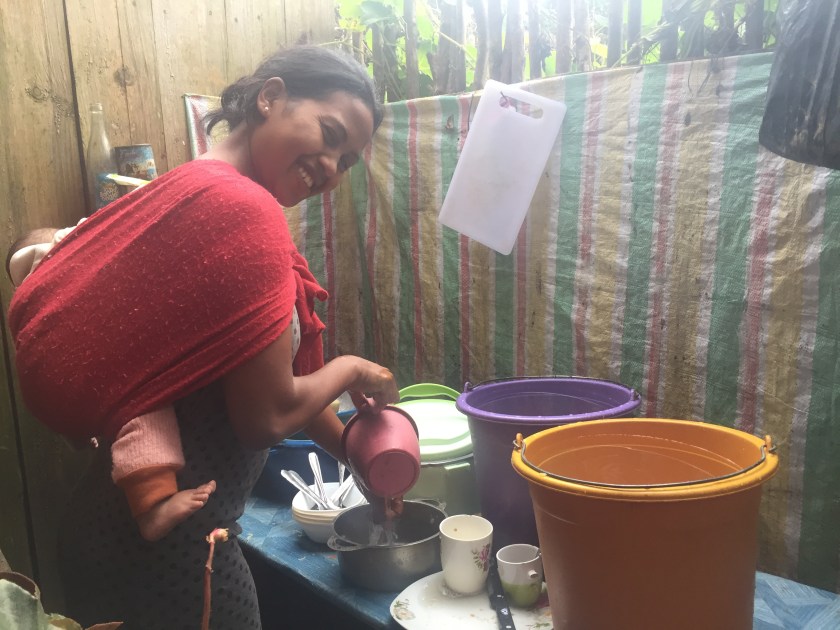
IMG_4212
washing dishes with nenyko and zandryko (my little brother).

We go back to our homes for sakafo atoandry (lunch)—usually beans and vegetables and always rice—then return for afternoon technical sessions: more class, more note-taking, more studying. My day finishes around 5:30 pm and I zip up my coat for the walk home. When the sun dips behind the horizon, it becomes quite cold. But this is still my favorite time of day. I take a shortcut home that passes through fields of rice paddies, all perfectly, geometrically aligned. The setting sun turns the stalks a crisp golden-yellow, and I smile to myself as I balance on small walkways in between them. I usually see my host brothers playing outside when I come home. We’ll eat dinner and maybe play some cards (though, since they’re very small, it’s usually just 52-pick up) but lately I’ve had so much homework to do, and I’m usually very tired. There’s an element of being “on” all the time that is very internally exhausting, even if I’m not aware of it as I’m going through my day. But though the days are long, and I’m grateful for a nice warm bed at the end of them, I love these days. I know they are special; soon training will be over and a whole new world will begin all over again. I’ll have to readjust and stretch my skin some more until something new fits. Then I’ll do it again, and again, and again. Life is full of stretch marks, but they also make really good stories.

Until next time!

Pre-Service Training #1: Welcome to Mantasoa!

Tonga Soa and Welcome! This marks the first of many posts about my new life…living and serving in Madagascar as a Peace Corps TEFL (English Language Education) Volunteer. This isn’t just a new job…it’s a whole new life. The best way I can explain what has been happening to me is this: I am relearning how to live. I feel like a child. Practically overnight, I lost the ability to communicate and the autonomy to make nearly all decisions for myself and by myself. It’s as if I’m giving up control of my life in order to be built anew. It’s hilarious, irritating, and very, very humbling. I wonder if deep down it’s necessary to experience a naissance in one’s host country to feel like you’re home and you really belong….

But, I am getting ahead of myself. For the sake of brevity I would like to answer a few burning questions you might be having about just what I’ve been doing since arriving in Madagascar…

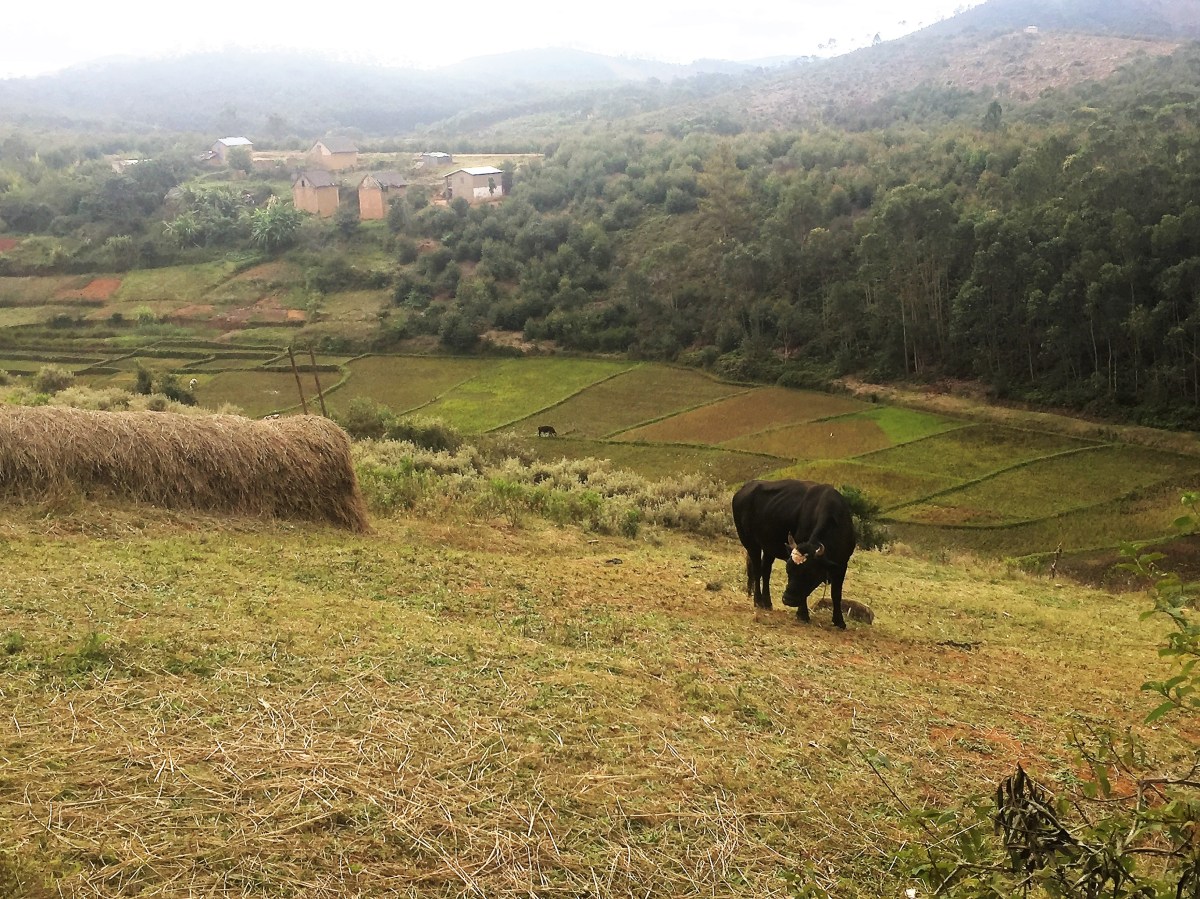
Where are you living? I am living in the town on Mantasoa, which is between 2 to 3 hours’ drive from the capital city, Antananarivo (known in-country simply as ‘Tana.’) Though Mantasoa is small (I heard a figure of around 5,000 people…I’m not quite sure if that’s accurate or not), it feels quite big because it’s very spread out. Little hamlets dot the landscape, tucked behind acres of rice fields and beautiful clear lakes. In the morning, haze lifts above the mountains and it is impossible to see five feet ahead of one’s nose.

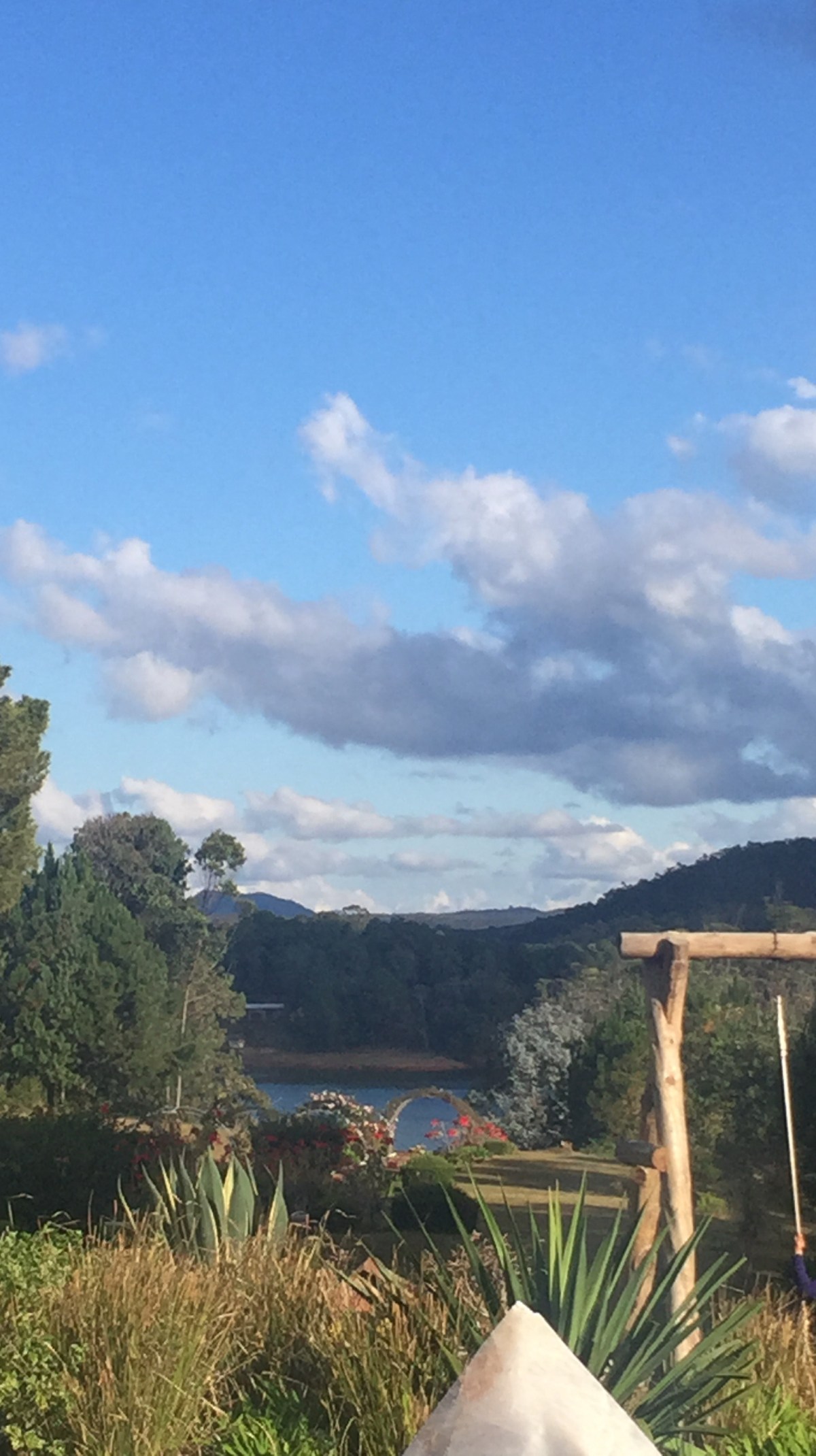
IMG_4196
View of Lake Mantasoa from the Peace Corps Training Center

Who are you living with? I am living with a host family, as are all twenty-nine other TEFL volunteers. We come together in the mornings and afternoons for language classes and technical training sessions.

What are you doing? Learning! We have four hours of language class every morning. So far, I have found Malagasy to be such a fun, sing-songy language with lots of repetitive vowels and literal meanings. I like it. Every afternoon we have technical sessions on a variety of topics: safety and security, health—(I now know more than I ever thought possible about ways to contract and treat diarrhea)—cross-cultural and education. In short, the days are long and jam-packed.

IMG_4195
Our PST focuses on experiential and student-centered learning techniques…so we do a lot of group work and writing on flipchart paper. Example A: Malaria awareness!

What are you eating? Rice! Lots of it. I’m also eating vegetables in incredible variety. My favorites so far include fried green beans, mashed pumpkin with garlic and ginger, and cauliflower with tomato and egg. I’ve also had so many varieties of beans that I can’t name even in English. But my most favorite thing is totomboanjo, which translates to mashed peanuts. Yes, it’s peanut butter, but: eat your heart out, Jiff. This is the real deal—salt and roasted peanuts only. I got to mash the voanjo (peanuts) on Sunday using my host family’s giant mortar and pestle, and I quickly realized that it might not be that difficult to stay in shape after all…

What do you do with your free time? To be honest, there isn’t much. Classes take up most days, and because it’s winter, it gets dark (and cooold) around 6 pm. Last weekend was Malagasy Independence Day, however, so there were soccer games and festivities; practically the whole town was out. It felt nice to be out in the sunshine and relax a bit, although it wasn’t entirely relaxing because I was still fumbling through my two-year-old Malagasy! Currently, I can hold a two to three minute conversation before my brain hits a wall.

Have you seen any lemurs yet? No. And I probably won’t for a while.

What’s next? Pre-service training continues for the next two and a half months. I feel totally unprepared for what’s to come, and I’m unable to speculate that much about it. Right now, I’m just Trusting the Process (as I learned from my last job) and relying on the many resources Peace Corps is giving me…books and notepads and curriculum to name a few. But the best resource so far has been the people: our Language and Cultural facilitators, our staff, my host family, my fellow trainees, my community. Talk about active learning!

Until next time! Stay tuned.

Packing for Peace Corps

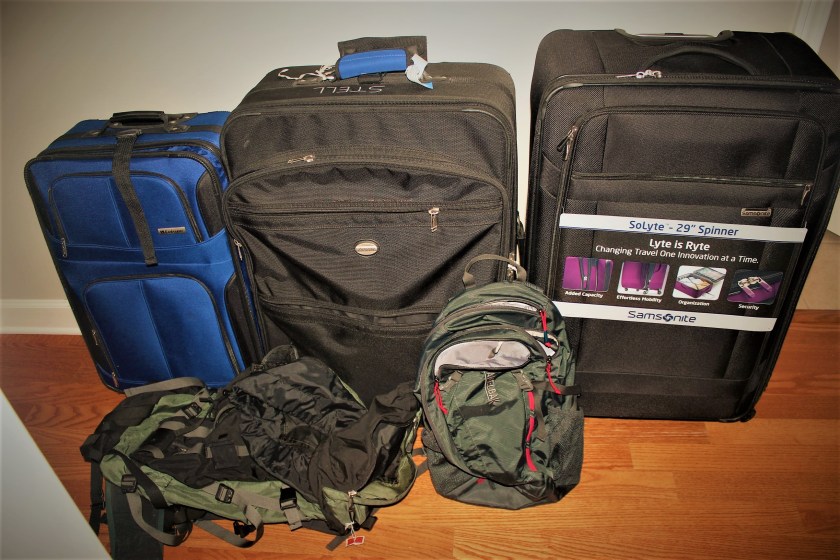
When packing for Peace Corps,  you can only take:

two suitcases, 23 kg (50 lb) each

one carry-on

one personal item

Geez. Guess I’ll be leaving my library at home!

A few months ago, I wrote a post touting the benefits of packing light. I’m a big believer in traveling light so that you aren’t weighed down (pun intended) by your own possessions. But lately I’ve just become so gosh darn possessive!

Going into the Peace Corps is a giant leap of faith. Sure, this can be very exciting and appealing to someone who has nothing to lose, but it makes for a frustrating packing experience. As a kind friend recently pointed out,  packing my bags is literally the only thing I can control about my experience right now. So I suppose it’s natural to want to pack up my entire life and take it with me across the world to Madagascar.

There’s a great quote originally from Matthew 6:21 (new testament) that says,

For where your treasure is, there will your heart be also.

For a few weeks now, my treasure has evidently become economy-sized Dove shampoo.

IMG_0078
How am I possibly going to decide what to pack??


It is impossible to know what to expect (and I should say that the Peace Corps staff for Madagascar has been ridiculously communicative through the pre-departure process, for which I am incredibly grateful! But even so, I’m nervous.) I suppose this is my first lesson as a volunteer: let things go.

In The Peace Corps Volunteer Handbook (which I highly recommend to anyone considering applying for service), the author says the following:

You may have an urge to pack 500 Q-tips and industrial size shampoos, but don’t. Give your new host country’s people credit; they have cool stuff of their own. [And besides], Being able to shake hands and give high fives [when stepping off the plane] is another great reason to pack light. (29, 32)

I did try and pack 500 Q-tips, though…and I don’t even use Q-tips!

I truly had to keep cutting back (and I’ve already packed a box full of non-essentials that I might request my dad to send to me a few months from now). In the end, the Q-tips, giant shampoo and fancy tea didn’t make it in my luggage…I might regret that later on. But I definitely don’t want to arrive with my hands so full that I can’t give a proper greeting to my new family.

I’m just going to have to trust. And if you think about it, people used to travel and with far less stuff. Have you seen the tiny closets that are in old houses? I think we’ve collectively, as a culture, become bogged down by our possessions and can easily find ourselves wrapped up in them, feeling like an extension of our things and not a human person. I’m guilty number one.

But this is okay. I’m learning. And now my friends in Memphis won’t have to buy shampoo for a very, very long time.