The Savior Complex

“A voice cannot carry the tongue and the lips that gave it wings. Alone it must seek the ether.” –Khalil Gibran


If I had my way, I would be a bird. I would fly from place to place and peep in on other people’s realities, never getting too attached or involved. I would skim the surface of life, laughing at my reflection in oceans and dancing on telephone wires. As a traveler, all I have truly ever wanted is to sit in tiny rooms with friends and drink in laughter between paper thin walls, sweet, steamy chai wafting through our noses and thick, melodious languages dripping from our tongues. But I’m not a bird, and I’m not a wallflower. I exist; people notice me.

I hate that people notice me. Sometimes I wish I could just keep the inspirational experiences in my heart and leave the embarrassing ones behind. I wish I could help people when I want to help rescue them and not when I feel obligated to do so. There comes a point when one can feel so emptied that we cannot seem to be filled. Perhaps this is because “help” has turned into “rescue.”

The world doesn’t give us a break. We can’t decide when people need our help, and we can’t really decide when we need another’s help. But not asking for help when we are drowning doesn’t make sense. Yet how do we move on from a rescue?

No man is an island. But for those of us who have grown up privileged, it’s easy to think that we have some God-given power to help others because of our circumstances, because we’ve been told to go out into the world and make it better. But change isn’t a power, it’s a responsibility, and a very precarious one. If you’re not aware of your own impact, you can do more harm then good.

Reflecting on my time in Thailand, I think I felt a lot of pressure to live up this image of a rescuer that, at the time, I was not aware I had. Being part of a faith community, learning about the plight of refugees, I became very involved with the idea of saving others. I didn’t see it as anything problematic, but I wasn’t just a witness. I was an actor and people noticed me and started assuming things about me that I wasn’t aware of because I was not fully present. I was in my own head. 

I grew up in my head. I dreamed away my reality with visions of waterfalls, open fields, and a sense of life with a purpose. I am learning how to live a life with purpose, but a lot of this has been painful. I think that’s the point. The hardest part about wanting to rescue someone is needing to save them from pain. Sometimes this is absolutely vital; sometimes it isn’t. I don’t know where that line is and I never want to make that decision but I know that I will. Life is tough like that. I have a tendency to remember only the good things and forget the times I failed. But at the same time, failure can be life’s greatest teacher, even if it means giving up and moving home. A friend of mine asked me, “What do you want to learn from this?” I think that’s a great start.

I’ve failed a lot in my life, which is how I know I’m not a savior. I believe there is only one Savior. But even if you don’t, as travelers, teachers, explorers, we have to start acknowledging our own impact. We are not wallflowers and we are not birds. We might be called on to rescue someone, but we need to examine our motivations as well as our plans. Does this person need help? If so, what does that need to look like?

Never stop asking questions.

67
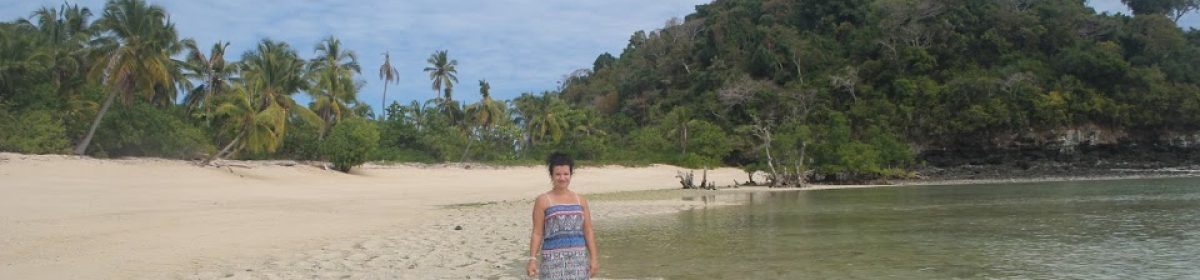
Inle Lake, Myanmar: 2015

What I missed: Travelling and Mental Illness

I cried all the way down the Grand Canyon.

Perhaps you could say I was overwhelmed by natural majesty. But what was probably closer to the truth was this: I had recently quit my job teaching English in Southeast Asia, ended a trans-continental relationship and moved back home, only to realize that everyone I knew had moved away in the five years that I had been gone. So I felt utterly alone as I traipsed down the narrow, winding pathways of the Grand Canyon’s South Rim Kaibab Trail. The tears fell in droves. I wiped snot away with my teeshirt sleeve. I had to stop at every corner and take a breath so that I could continue down alive. This wasn’t the Western adventure I had had in mind.

We were halfway into our week-long road trip west. Me, my older sister Emily and my dad Bill packed up Emily’s Honda civic to move her to her new tech job in San Francisco. None of us had been to the Grand Canyon before and I convinced the team to stop en route. I had visions of donkeys dancing in my head and was eager to spend the day sweating and struggling over cliffs and mountain peaks. When we got there, however, we spent a long time deciding on a plan of action, and I got frustrated. Emily’s dog was with us, and dogs are not allowed inside the Canyon (they’re allowed on the scenic trail up top but cannot go down into the crater). Poor guy. But I wasn’t about to let him ruin my Grand Canyon adventure.

In the midst of our planning and discussing, I took off, almost at a run, feeling like I would burst if I sat still a moment longer. I climbed down part of the outer rim and peered over the edge: fur trees, alabaster stone and birds flying high encompassed me. I breathed it all in. In my mind I went back in time to when I hiked Sde Boker by myself, in a similar situation, feeling so frustrated with life that I couldn’t sit still. I wanted to climb higher and higher until the world ended and I fell off the edge. Evidently, that feeling hasn’t gone away.

I’ve had depression all my life and I know how oppressive it feels. I know it gets worse in times of high stress or drastic change. Turns out, moving overseas and teaching ESL is both.

Have you ever met a lactose intolerant person who loves ice cream? That’s how I feel about travelling. It makes me nauseous, but I love it anyway. Yes, planning a trip can be stressful. Your plans don’t always work out as you’d hoped. It might rain. Your hotel might be completely booked, or worse, non-existent (shout out, Vietnam). Or you might end up shouting at your wonderful family because you had unrealistic expectations of how much hiking you could accomplish in half a day with a tiny dog and an aging father (sorry, Papa).

I lost it at the Grand Canyon because I hadn’t seen anything so beautiful since Myanmar–and I missed that time in my life. Suddenly I wanted freedom, to roam, unattached, transient and visible only to those whom I chose to allow in. I’ve been struggling with accepting the modicum of stability I have now at “home” in the United States.

Upon deciding to move home, I remember thinking that this would be a good idea because it would “stabilize” and “normalize” me. But I think I didn’t give myself enough credit. There is nothing abnormal about working overseas. It all depends on who you ask. As I get older, I realize: people are going to think what they’re going to think. Don’t live your life based on other people’s comments, and don’t apologize for being who you are. Travelling is not infantile, criminal or glamorous. It’s just living, a different way.


IMG_2025 (1)

Juggling

Written February 20.


College is very strange; it’s a microcosm of emotions in extremity. It’s a fishbowl, overflowing with bubbles and water and plastic jewels.


I moved on campus. As a second semester senior, I moved on campus. I never do anything in the prescribed order. I think I’m physically incapable of normalcy. This isn’t a good thing.

I met wonderful, beautiful, truly lovely people. I love them and I think they love me, and I am very, very happy. Truly happy.

I’m still restless and a little bit sad. I think I will always be a little bid sad? Maybe I’m in mourning.

I’m mourning for the world? What did the world ever do for me?

Nothing. The world is a broken place. That’s why we are only here for a short amount of time. We won’t live forever, not here. (But God gave me life. I am here out of love.)

Where will we go? I wish I knew. I’ve made a lot of guesses in my life, but no one will ever know.

Somehow knowing that we’re only here temporarily liberates me to be free and to try without recourse or fear or failure; because, after all, what is failure but the opportunity to fail again, better? 

Samuel Beckett said that–or something like it. Dr. Cornell West quoted that today, at my school–a school I have become very proud of since moving here and realizing that ideas are made and grow swimming around inside fishbowls until they get so big they burst out and rain down on the coffee table.


True, ideas come from people and people are still human. But what does it mean to be human? Does it mean to accept our flaws, our sins, accept Jesus and accept our brokenness?

When we do that, what then? When we accept our flaws, our sins and our brokenness, where can we go from there? Can that acceptance liberate us?

Acceptance can liberate a lot of things. Acceptance can make us free to pick up the pieces when we fall down, to fall better, to fall more. Falling, failing, flawing, flying, floating, fleeing, seeing and being human. 

I was amazed tonight at a juggling performance. The juggling was mesmerizing; so was gravity, drawing balls and pins toward the ground, banging the earth, bouncing back into the boy’s hand as he picked up the balls he dropped and threw them again into the air, juggling, two, three, four balls and pins and circular things. He dropped them, they dropped him, he picked them up and threw them around again and the falling became part of the dance.


May you always keep falling, keep flying, keep running, keep, keep, keep falling and dancing, flailing and flawing, being human.