Dahira

There was a party in my neighborhood last Saturday. I didn’t know what it was for, but I knew something was happening. My friend Kodotsia had already made me a salovana (a long dress that is tied at the chest and often worn on festive occasions) from a beautiful red and white pattern. Florosia had braided my hair with extensions. They’d been talking about this all week. But still, I had no idea what was actually happening. My language skills are so limited that most of the time I just watch someone talking words to me until I hear “Alo, atsika,” which means “Let’s go” and then I follow people. Ah, adjustment.

7 am: Kodostia calls to me from outside my wooden gate. She’s already wearing her salovana. I was still sleeping (I’m used to sleeping in, but that’s not really a thing here…).

“Oh, you’re not ready yet?” She looks at me confused. I’m still half asleep.

“Okay, I have some clothes left to wash, so I’ll come get you a little later.”

I’m never sure what “later” means.

9:00 am (ish): I’ve been sitting on my bed, dressed in my salovana for an hour, because I didn’t want Kodostia to come back and me still not be ready (I hate being late). After a while, four girls appear at my door. They are wearing salovanas with matching headscarves and beautiful jewelry. They are carrying buckets and large wooden spoons and pots. A boy is with them, carrying a huge sack of what turns out to be rice, on the seat of a bicycle. They beckon me to come with them.


IMG_4415.JPG
my guides for the day, ready to magnanao fety (have a party)


We walk a little ways into a forested area and sit under the shade of a large mango tree. There are a few older women there as well. Almost immediately, the women pull out “sahafas,” circular trays that are used to clean rice, and we start to pick rocks from the rice and throw them out. I’m used to this, so I invite myself to join in the rock-picking. It’s surprisingly meditative.

As we pick rocks and sift rice, the girls start asking me questions about America. I try to answer as best I can, but it’s hard because I’m still so self conscious about wearing a dress that I’m not used to and constantly adjusting my bum because I’m sitting on a tree root and my legs keep going numb. Still, I smile, because they’re obviously having a good time, so why shouldn’t I?

IMG_4417
pre-party selfies

12:00 pm (ish): The rice, I soon learned, was being cooked to feed several hundred people. The women who seemed to be in charge cooked it in enormous pots, big enough for a child to take a bath in, and I smiled because it reminded me of the book Stone Soup. Once ready, the women served the rice on large platters and placed a plastic bowl of beans in the middle. My new friends handed me a spoon and then we squatted on the ground and ate together, from the same platter, taking small spoonfuls of beans and mixing them with the rice.

After lunch, there was music and dancing. The crowd had grown to at least a thousand, with families and friends camped under mango trees, eating and talking and napping. It reminded me of Sunday afternoon at Overton Park in Memphis. A crowd was gathered around a clearing, so I went to see the entertainment. Two men about middle aged were standing and beating large oval drums. A third man blew a conch shell. Then two men and two women appeared dressed in red and white clothing, two with headdresses that bore the Muslim crescent moon, and two with staffs. They danced. The dancing was aggressive yet calculated, their feet moving rapidly in time with the drum beats, like walking on hot coals. A group of women and girls sat nearby under a tree and sang.

It’s hard to describe my exact feeling, but something about this moment, watching the dancing, being part of a crowd of spectators, felt familiar to me. I had no idea what the dancing meant and I wanted to know, but in a broader sense, I knew it was telling a story of something important. It made me think of the revolutionary war re-enactments we used to go see in Plymouth, Massachusetts (don’t ask me why, but it did): men and women dressed up in costume, performing something meant to remind the spectators of some important part of a shared history. That’s culture…ritual, reminder, togetherness. It’s so familiar. And yet it’s so unfamiliar. Two different stories coexisting rather than contradicting: is this what my boss meant by “the paradox of two truths?”

“Do they do this in your country?” Someone asked me. My first instinct was to say, “no,” but then I thought of Native American ceremonies that I’ve only witnessed a small handful of times and there was something about the honor and majesty of those ceremonies that seemed apropos in the context of this celebration, so I said yes, only to realize that I had no idea how to explain Native Americans with my ten words of Malagasy, so I think I said something like “people from a long, long time ago before white people went to America” and then smiled and pretended not to understand anyone else’s questions because I  was still in my very strange dress with braids in my hair, standing under a mango tree in the North in Madagascar, eating rice on the ground with a spoon.

It was a very good day.
The RN6

The Route National 6 goes from Maevatanana in the Northwestern part of Madagascar all the way up to Diego Suarez, the port city that is the northern most tip of the country. The drive from Maevatanana to Diego can take up to two days, depending on how long you stop, if you’re driving at night (not always recommended) and if there are a lot of freight trucks in front of you.

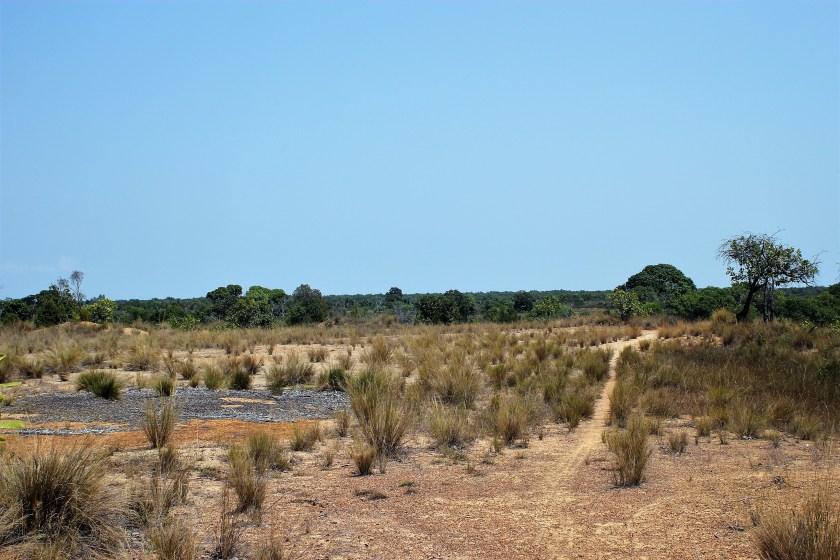
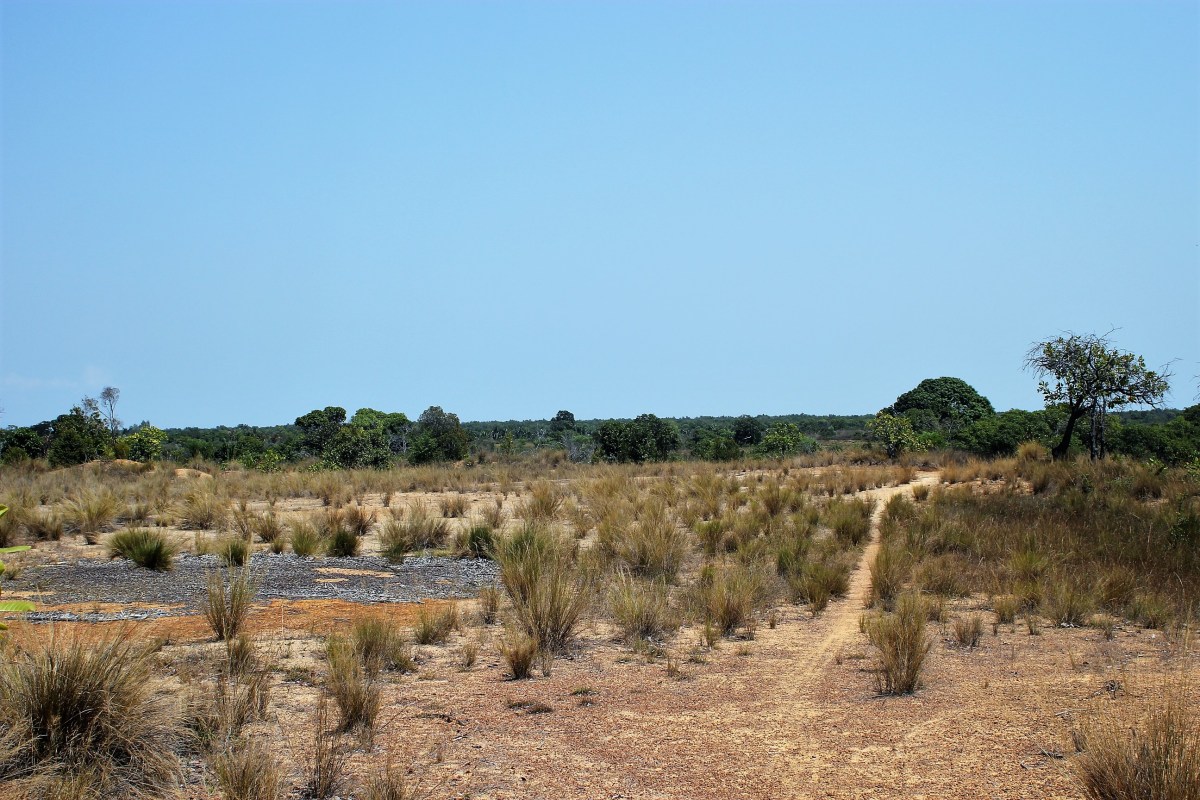
I made this drive with four other education volunteers, two Peace Corps drivers, and staff, almost two months ago, after I completed training and was sworn in as an official Volunteer. We departed from Tana early Saturday morning, September 9, with all our belongings stuffed in the back and on top of the jeeps. After spending most of the day winding up and around harrowing cliffs, the road begins to flatten. The mountains suddenly disappear. In their place appears flat, wide prairies as far as the eye can see, prairies that rise to greet the horizon with a whisper of “I feel your silence. I’ve been watching you for a hundred thousand years.” I’m speechless. What do I have that can measure up against the breadth of the Malagasy landscape?


IMG_0009.JPG
View from the Road


And just like that, new mountains appear like scraggly Hershey’s kisses, peppered with tall, magnanimous Ravinala: the national tree of Madagascar. The Ravinala tree stands tall and proud, its crazy palms spread wide like a male peacock during mating season. In the foreground, the trees become plentiful and the forest thickens with palms and banana trees. The dirt turns to sand, and I am home.


21616274_1433239426797443_3189769897591854530_n.jpg
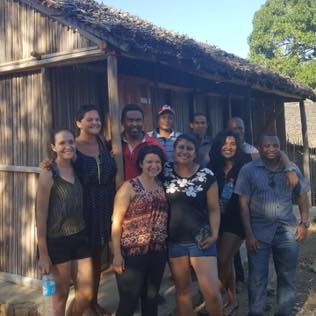
The northern crew in front of my new Ravinala house.


Perhaps my favorite experience with the glorious RN6 so far are the long bike rides I’ve taken down its flat, paved, sometimes windy and always interesting path. Peace Corps issues every Madagascar volunteer a bicycle, because so many roads are in poor condition and public transportation can often be a hassle. I knew this from the beginning of training. I also knew that I hadn’t ridden a bike since being knocked off mine by a moving vehicle last year. I was a bit anxious.

Still, I don’t like to run away from challenges, especially ones that I believe I can overcome. I had a bike. I had a path. I had a helmet. And I had an abundance of time. It was a simple enough conclusion to draw: I was going to ride.

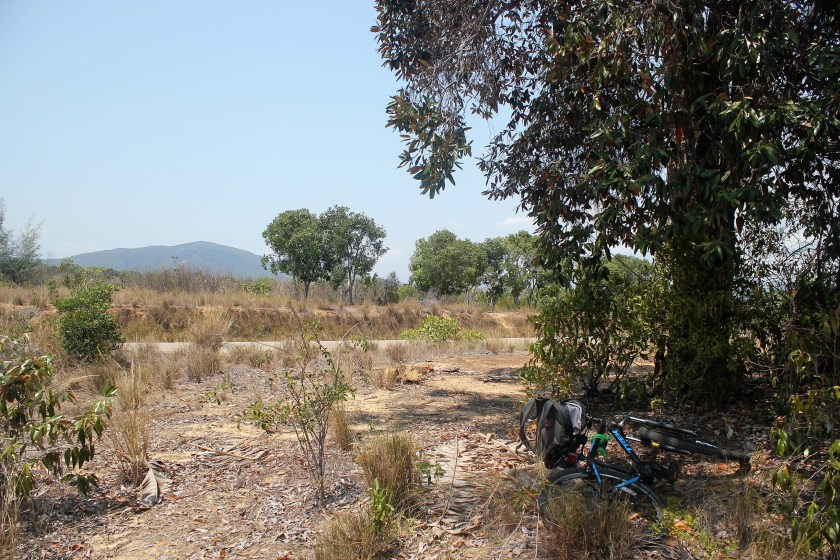
So I woke early one morning, lathered myself with sunscreen, and left my little Ravinala house behind. I mounted my bike and pushed away from the tarmac. The peddling came back easily, to my delight, like an old dance. The seat adjustment took a bit of time, as did figuring out the gears and learning how to navigate pedestrians, ox carts, public vans, big trucks and narrow bridges. But despite all these distractions, there were still stretches of my journey where I was completely alone: just me and the RN6. Mountains rose to shelter me on either side; I passed rice fields, banana fields, neighborhoods full of Ravinala houses like mine, kids eating mangoes, people sitting in the shade, pelicans eating fish from rivers. I’ve never seen anything like it, and I can’t quite describe it. I don’t have the vocabulary.

IMG_0010
Resting in a patch of shade

But there were moments where I’d look up to the sky, feel the weight and breadth of the air surrounding me and think, is this really my life?


Chapter One: The Beginning

Where else can I begin? I wriggled myself free from the rusty leather seat of the tax-brousse and spilled out onto the paved asphalt road. I looked down at my feet, unaware of how swollen they’d become from twenty four hours in the van. The road from Tana to Ambilobe is paved, which is an enormous blessing, but the road is narrow and windy and there is only one way. If you get stuck behind a freight truck, you have to pass it or move to the side, and if the tires need changing, which they always do, you have to stop on the side of the road to do it. That normally happens in the middle of the night right after you’ve finally managed to nod off.

So when I arrived in my new hometown, I was extremely tired and a little bit sore, and I stood on the pavement outside the brosse as people and colors swarmed around me and our driver unloaded our bags from underneath the seats and above the van on the roof, previously secured under blue tarp with some rope. I barely have enough time to look up before people are smiling at me and talking to me, but at that moment it only sounded like noise. I handed my sleeping to a tall woman with a kind face a broad smile and followed her away from the road. The crowd has steadily grown, and one man starts shouting to everyone that, “look! A foreigner has come here and she doesn’t understand Malagasy.” I turned around and, with my best stern face and practiced accent say, “Of course I understand Malagasy,” and his eyes went big and then he started laughing. If we were playing a game, I’m not sure whether I won it.

I followed the trail of people and baggage down the side road and onto a sandy path that revealed my home for the next ten days.

It’s hot in my new town. Thankfully my host sister, the one with the big smile and the kind face, hands me a bucket of water immediately and says, “go, shower.” Who knew something so small could be so sweet? The shower was outside and built out of bamboo leaves and immediately made me think of the 1960s movie version of South Pacific, that scene where Mary Martin is washing her hair on the beach. I know I’m not in a movie, but sometimes I like to pretend, because everything feels so foreign anyway.

Karibo,” my host sister,  Nasy, says to me after I finish my shower. “Come in and eat.” I sit down cross-legged on the bamboo mat and dig in to a plate of milky white rice, vegetables and fish. She stares at me…I’m not sure what she is looking for. She starts talking and my ears begin to buzz; I cannot keep up with the flood of loud, boisterous language coming towards me, punctuated with whoops and whistles and exaggerated vowels and syllables. It’s nothing like the way people speak in Tana, in the highlands, where I’d been training. And neither is Nasy. When she smiles and laughs, her whole body shakes, a deep, rich laugh that echoes through the compound. When she hears music coming from a neighbor’s house (which always happens), she begins to dance like she is keeping a secret and wants to make you guess what it is. She is not timid. I see no fear in her. But then again, I barely know her.