
Cultural Adjustment: The Six Month Slump

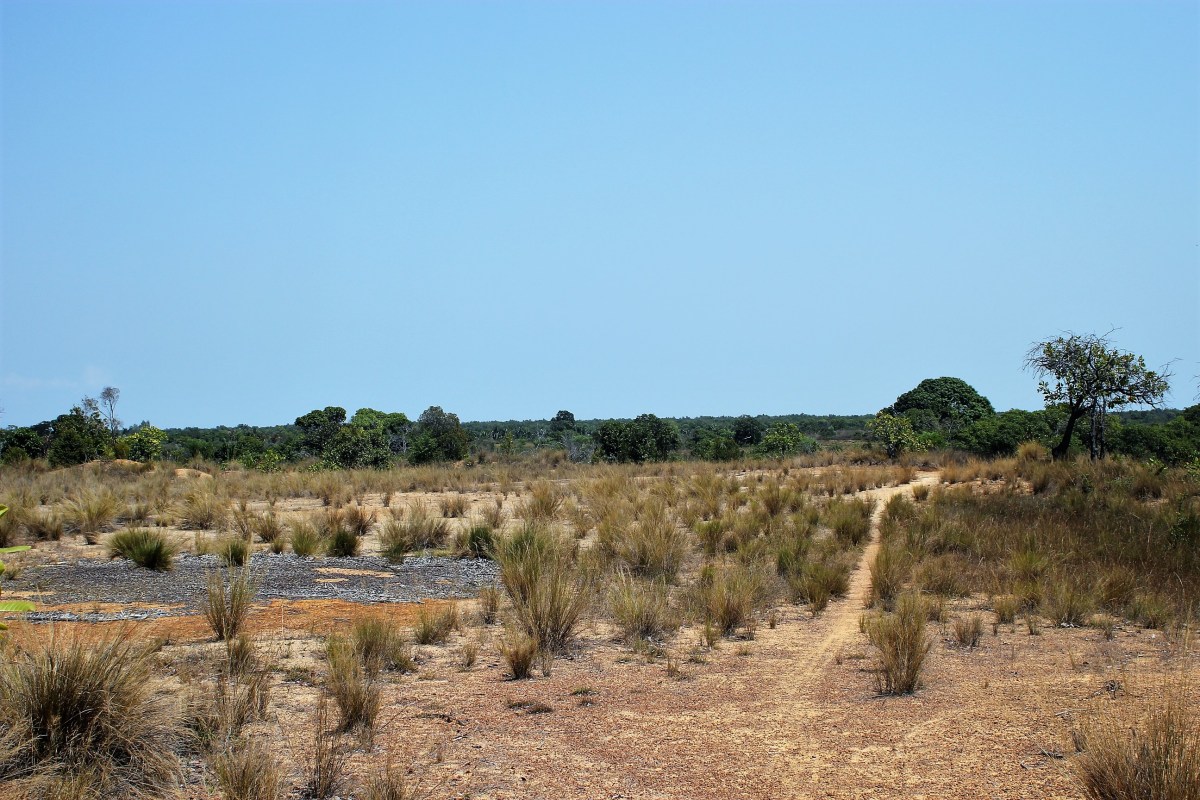
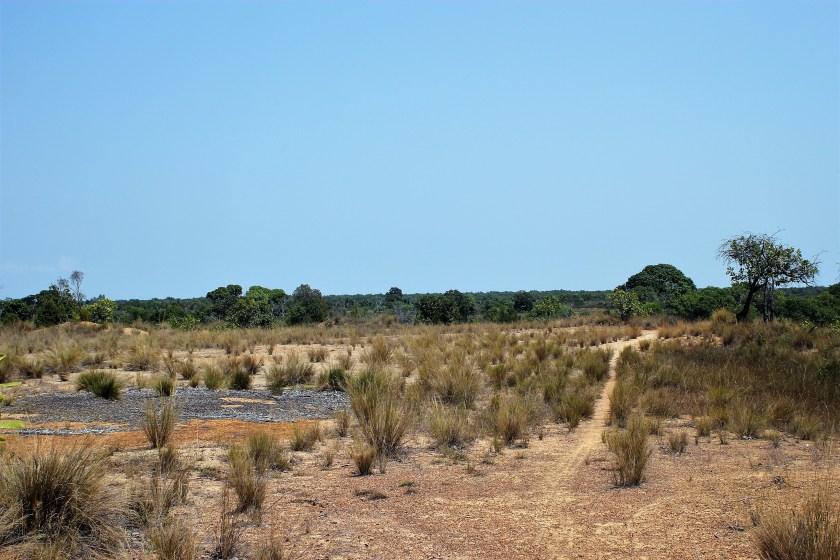
img_5048.jpg
omelette for dinner

What do all of the following items have in common?

  • cooking omelettes

  • exercising
  • fishing
  • watching cows
  • reading Harry Potter

They belong on my list of things that have made me happy this past month.

It’s been a slow moving month.

Between extra meetings that caused lapses in school, a surprise cyclone, an illness and a school holiday, I feel like I have accomplished virtually nothing all  month. My English club has had exactly one meeting, it’s been very hard to get in touch with people, and because of exams (at least, I hope that’s why), fewer students have been coming around to study English.

Then another cyclone hit. We had our first one of the year back in early January, during which groups of volunteers were consolidated in various larger towns out of precaution. This time, however, we received no warning and were all at home in our villages. This meant days and days of endless rain and wind, no school, no market, no sun to charge electronics or solar lights. Frankly, it was a bit depressing. I played a lot of cards with some of my students, the ones who were brave enough to walk in the rain to come visit me. I also got my hair braided by a friend and taught those same students some American songs. So, the cyclone wasn’t a total loss.

When you live in a small village, with no electricity or amenities, and whose population is mostly farmers, life tends to move at a snail’s pace. Everything from sifting, picking, washing and cleaning rice to pounding, pounding and pounding cassava leaves for dinner, to transplanting rice to make it grow, to sewing clothes, to fetching water, to walking to school, takes its time. When I first arrived to my village, I was captivated by this slower pace of life. Here were some people who were not stressed and angry all the time, I thought. How different their temperaments are from Americans, whose lives revolve around calendars and alarms and rushing, rushing, rushing.  

This is still all true, of course. It’s still beautiful. But it’s also so boringly ordinary. I’m crossing off exactly six months living in my village (nine months total in country). I’m due for a Six Month Slump.

The habits that I found peculiar and fascinating during my first few months I often find irritating now. I find myself thinking things like, “why doesn’t he or she just do this instead?” I also find myself fed up with the slow and tedious ways of cutting grass, making peanut butter, washing my clothes, having no food storage, chasing away rats, walking through mud, dealing with miscommunications, dealing with language mistakes, dealing with insults or ridiculous questions or the insane lack of privacy and anonymity.

Image result for cultural adjustment u curve
the u-curve: a commonly held theory of the stages of cultural adjustment

I wrote about a similar experience when I was living and working in Thailand. Even though I lived in a big city then, my feelings towards Thai culture and everything unfamiliar pulsated with resentment. According to the U-curve theory of cultural adjustment, months 4-9 are right around the time where everything, for lack of a better term, feels like shit. Nothing seems to make sense; you get frustrated at every little thing, and maybe, you just want to go home. That’s me, right now.

Being someone who has a history of depression, this can be a dangerous game. The resentment, anger and isolation I feel can quickly breed and fester and cause me to alienate myself even further from my village, my people, my new Madagascar. Because I like to justify my feelings, it’s easy for me to talk myself into the fact that I deserve to feel resentful and upset, and that I deserve to ignore people and keep to myself, and that I deserve to give myself a break and stop trying.

I know.

Rereading my own post from three and a half years ago tickles me, because my thoughts are so similar, and my conclusions are so simple. Yet somehow, I’m incapable of remembering my own life lessons:

Eventually, I had to emerge from my hole in the wall and breathe in the smelly air of Bangkok [again], because at a certain point I ceased to recharge, and I ended up hurting myself by isolating myself beyond what was necessary. This is something, I’m noticing after many years, I tend to do.

So it’s a habit, and it’s a habit I haven’t yet successfully broken. So how do we mentally unstable do-gooders deal with the onslaught of berating thoughts?

The best way I know to deal with this is to keep going and just do it. The mantra of athletes and successful people who are obviously not me, seems simple and straight forward. Just do it. Just keep going.

I’ve been given this simple, profound advice from current PCVs and RPCVs who served all over the globe. The simplest way to keep going is just to keep going. Breathe, let things go, get a good night’s sleep (if the rats don’t keep you awake), and keep going another day.

Just do it.
On Coexistence and Feeling Pain

A few days ago I woke up to the familiar sound of a dog barking–a low, deep, rapid barking that sounded exactly like my dog Lucky’s bark back home.

With my eyes still closed, lying under my mosquito net, I was transported. I heard the sound of my dog’s barks, then felt the soft cotton sheet of my twin bed in the guest room where I slept for four months before service. I heard the low growling of the coffee maker coming from the kitchen and rolled over, deciding to sleep a little longer.

The next moment, the drip drip of the coffee maker gives way to a rooster crowing and men and women shouting to each other: “Vaovao!” they say. “What’s new today!” the ox carts rumble past, squishing over soft mud from last night’s rain.

In a single moment, the symphonic percussions in my ears pull me in two directions: one is a brick home in Memphis, Tennessee; the other is a ravinala hut  in the country-side in rural Madagascar. With my eyes still closed, I feel as if I’m floating, suspending between two coexisting realities, both already melded into my heart.


Two nights ago, my second niece was born: a girl. I took one look at the her picture over Facebook messenger and burst into tears. The pain of not being there a second time for the first year and a half of my new baby niece’s life was unbearable. I did not feel guilt but supreme sadness. And I cried.

In that moment, I wished I could be there to hold her and hug my family and kiss my stepsister and congratulate them on their beautiful, growing family. But I didn’t want to go home. I wanted to transport my family to my little grass hut and have everyone and everything I love for once, finally, be all in one place.

Yet when I closed my eyes and laid down on my soft foam mattress, smelled the clean air around me and felt the quiet of a dark, black neighborhood asleep under the stars, I felt a sense of peace and connection that calmed my fears, my painful longings, my anxiety and my guilt.

Guilt is like wet cement: once you get stuck in it, it becomes harder and harder to get out. I always ask myself why I chose to come here. What was it about “home” that I wanted to leave behind? What was I giving up?

In reality, I don’t think there was anything wrong with my home life. I loved my family and friends. That love never stopped being enough. I just started to need something else in my life. Maybe it has something to do with finding a way to feel safe and secure without the comfortable bubble of a familiar, easy life. I think my experience here is about finding ways to live out my values of human equality and equal opportunity and not be held back my the guilt and anxiety that tells me I need to keep myself “safe” and shouldn’t take risks–risks that could lead to embarrassment and failure, but also amazing results.  Maybe you can be wise and brave at the same time.

I heard a quote from Maya Angelou the other day: “do the best with what you can until you know better. Then when you know better, do better.” As a Peace Corps volunteer barely six months into service, I know about as much as a two year old. But I also know that growing up and learning is possible; I’ve done it before in my country, America. I learned some very hard lessons in some very painful ways. Now I’m doing it in Madagascar. And I’m no longer afraid of the pain. When I wept in my hut for sadness and loneliness, it might have been dramatic through someone else’s eyes, but for me it was what I needed to feel. I’m no longer afraid of feeling, because I think feeling is the most authentic way of being human. There are no distractions here to hide my discomfort, or sadness, or disappointment: no gyms or movie theatres or bars or restaurants or clubs or Netflix or ice cream parlors to numb the pain of another bad day, another disappointment. Most nights, it’s just me and my mosquito net.

This is how it needs to be. And as my little niece grows up in America, taking in all the sights and sounds of this crazy new, noisy world, so will I grow here in Madagascar, slowly crawling and then learning to walk and talk and decipher how to be in my reality. Home will never stop being a part of my reality. But I think now I just need to make more space in my heart for two existences.

The heart, I believe, is like a plant that can just grow and grow if we feed it well.

Here’s to nourishment.


IMG_4961.JPG
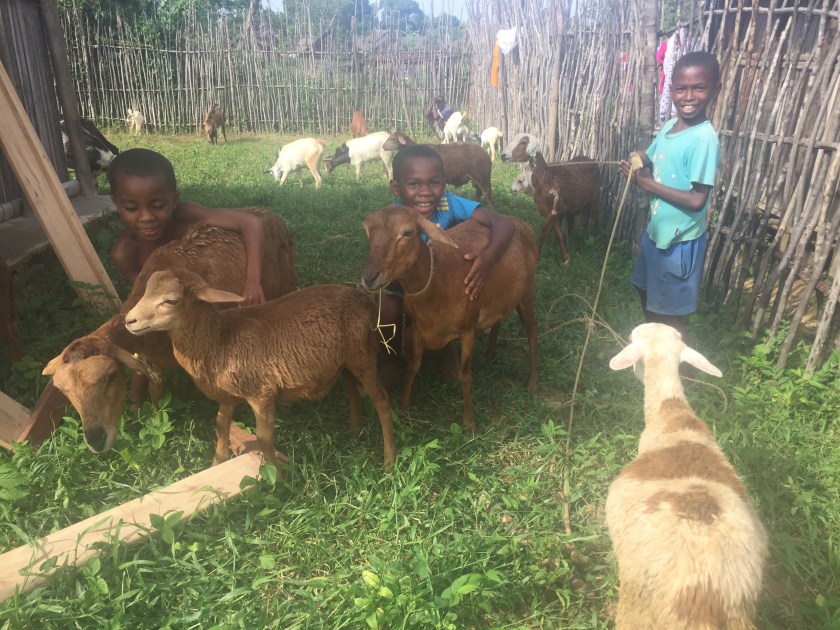
Three of my zandrys (little brothers) posing on sheep-grazing day. They are pictured in my yard.


Dahira

There was a party in my neighborhood last Saturday. I didn’t know what it was for, but I knew something was happening. My friend Kodotsia had already made me a salovana (a long dress that is tied at the chest and often worn on festive occasions) from a beautiful red and white pattern. Florosia had braided my hair with extensions. They’d been talking about this all week. But still, I had no idea what was actually happening. My language skills are so limited that most of the time I just watch someone talking words to me until I hear “Alo, atsika,” which means “Let’s go” and then I follow people. Ah, adjustment.

7 am: Kodostia calls to me from outside my wooden gate. She’s already wearing her salovana. I was still sleeping (I’m used to sleeping in, but that’s not really a thing here…).

“Oh, you’re not ready yet?” She looks at me confused. I’m still half asleep.

“Okay, I have some clothes left to wash, so I’ll come get you a little later.”

I’m never sure what “later” means.

9:00 am (ish): I’ve been sitting on my bed, dressed in my salovana for an hour, because I didn’t want Kodostia to come back and me still not be ready (I hate being late). After a while, four girls appear at my door. They are wearing salovanas with matching headscarves and beautiful jewelry. They are carrying buckets and large wooden spoons and pots. A boy is with them, carrying a huge sack of what turns out to be rice, on the seat of a bicycle. They beckon me to come with them.


IMG_4415.JPG
my guides for the day, ready to magnanao fety (have a party)


We walk a little ways into a forested area and sit under the shade of a large mango tree. There are a few older women there as well. Almost immediately, the women pull out “sahafas,” circular trays that are used to clean rice, and we start to pick rocks from the rice and throw them out. I’m used to this, so I invite myself to join in the rock-picking. It’s surprisingly meditative.

As we pick rocks and sift rice, the girls start asking me questions about America. I try to answer as best I can, but it’s hard because I’m still so self conscious about wearing a dress that I’m not used to and constantly adjusting my bum because I’m sitting on a tree root and my legs keep going numb. Still, I smile, because they’re obviously having a good time, so why shouldn’t I?

IMG_4417
pre-party selfies

12:00 pm (ish): The rice, I soon learned, was being cooked to feed several hundred people. The women who seemed to be in charge cooked it in enormous pots, big enough for a child to take a bath in, and I smiled because it reminded me of the book Stone Soup. Once ready, the women served the rice on large platters and placed a plastic bowl of beans in the middle. My new friends handed me a spoon and then we squatted on the ground and ate together, from the same platter, taking small spoonfuls of beans and mixing them with the rice.

After lunch, there was music and dancing. The crowd had grown to at least a thousand, with families and friends camped under mango trees, eating and talking and napping. It reminded me of Sunday afternoon at Overton Park in Memphis. A crowd was gathered around a clearing, so I went to see the entertainment. Two men about middle aged were standing and beating large oval drums. A third man blew a conch shell. Then two men and two women appeared dressed in red and white clothing, two with headdresses that bore the Muslim crescent moon, and two with staffs. They danced. The dancing was aggressive yet calculated, their feet moving rapidly in time with the drum beats, like walking on hot coals. A group of women and girls sat nearby under a tree and sang.

It’s hard to describe my exact feeling, but something about this moment, watching the dancing, being part of a crowd of spectators, felt familiar to me. I had no idea what the dancing meant and I wanted to know, but in a broader sense, I knew it was telling a story of something important. It made me think of the revolutionary war re-enactments we used to go see in Plymouth, Massachusetts (don’t ask me why, but it did): men and women dressed up in costume, performing something meant to remind the spectators of some important part of a shared history. That’s culture…ritual, reminder, togetherness. It’s so familiar. And yet it’s so unfamiliar. Two different stories coexisting rather than contradicting: is this what my boss meant by “the paradox of two truths?”

“Do they do this in your country?” Someone asked me. My first instinct was to say, “no,” but then I thought of Native American ceremonies that I’ve only witnessed a small handful of times and there was something about the honor and majesty of those ceremonies that seemed apropos in the context of this celebration, so I said yes, only to realize that I had no idea how to explain Native Americans with my ten words of Malagasy, so I think I said something like “people from a long, long time ago before white people went to America” and then smiled and pretended not to understand anyone else’s questions because I  was still in my very strange dress with braids in my hair, standing under a mango tree in the North in Madagascar, eating rice on the ground with a spoon.

It was a very good day.

The RN6

The Route National 6 goes from Maevatanana in the Northwestern part of Madagascar all the way up to Diego Suarez, the port city that is the northern most tip of the country. The drive from Maevatanana to Diego can take up to two days, depending on how long you stop, if you’re driving at night (not always recommended) and if there are a lot of freight trucks in front of you.

I made this drive with four other education volunteers, two Peace Corps drivers, and staff, almost two months ago, after I completed training and was sworn in as an official Volunteer. We departed from Tana early Saturday morning, September 9, with all our belongings stuffed in the back and on top of the jeeps. After spending most of the day winding up and around harrowing cliffs, the road begins to flatten. The mountains suddenly disappear. In their place appears flat, wide prairies as far as the eye can see, prairies that rise to greet the horizon with a whisper of “I feel your silence. I’ve been watching you for a hundred thousand years.” I’m speechless. What do I have that can measure up against the breadth of the Malagasy landscape?


IMG_0009.JPG
View from the Road


And just like that, new mountains appear like scraggly Hershey’s kisses, peppered with tall, magnanimous Ravinala: the national tree of Madagascar. The Ravinala tree stands tall and proud, its crazy palms spread wide like a male peacock during mating season. In the foreground, the trees become plentiful and the forest thickens with palms and banana trees. The dirt turns to sand, and I am home.


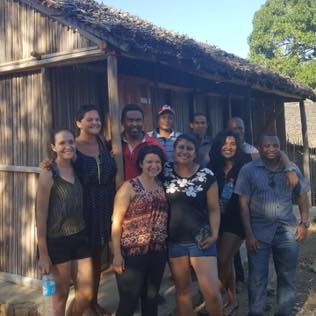
21616274_1433239426797443_3189769897591854530_n.jpg
The northern crew in front of my new Ravinala house.


Perhaps my favorite experience with the glorious RN6 so far are the long bike rides I’ve taken down its flat, paved, sometimes windy and always interesting path. Peace Corps issues every Madagascar volunteer a bicycle, because so many roads are in poor condition and public transportation can often be a hassle. I knew this from the beginning of training. I also knew that I hadn’t ridden a bike since being knocked off mine by a moving vehicle last year. I was a bit anxious.

Still, I don’t like to run away from challenges, especially ones that I believe I can overcome. I had a bike. I had a path. I had a helmet. And I had an abundance of time. It was a simple enough conclusion to draw: I was going to ride.

So I woke early one morning, lathered myself with sunscreen, and left my little Ravinala house behind. I mounted my bike and pushed away from the tarmac. The peddling came back easily, to my delight, like an old dance. The seat adjustment took a bit of time, as did figuring out the gears and learning how to navigate pedestrians, ox carts, public vans, big trucks and narrow bridges. But despite all these distractions, there were still stretches of my journey where I was completely alone: just me and the RN6. Mountains rose to shelter me on either side; I passed rice fields, banana fields, neighborhoods full of Ravinala houses like mine, kids eating mangoes, people sitting in the shade, pelicans eating fish from rivers. I’ve never seen anything like it, and I can’t quite describe it. I don’t have the vocabulary.

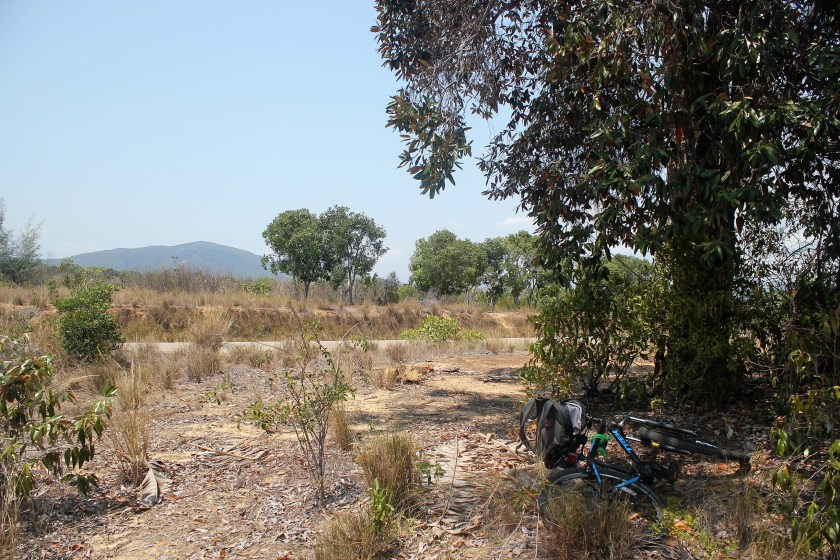
IMG_0010
Resting in a patch of shade

But there were moments where I’d look up to the sky, feel the weight and breadth of the air surrounding me and think, is this really my life?