Blog

Strong Like A Woman

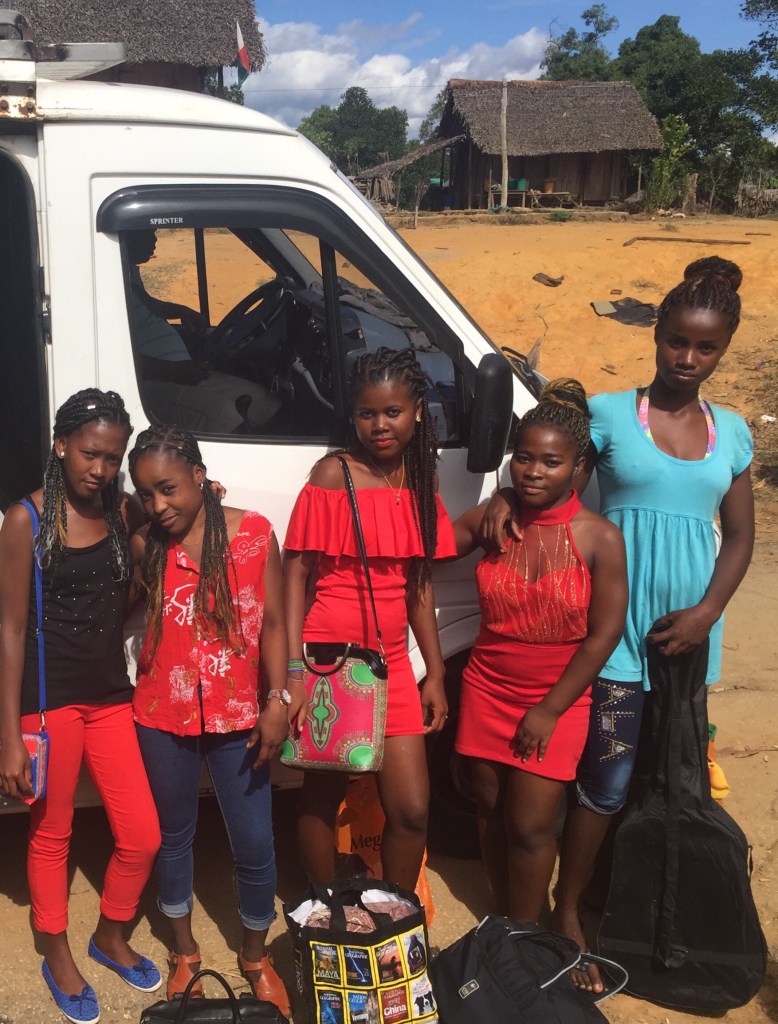
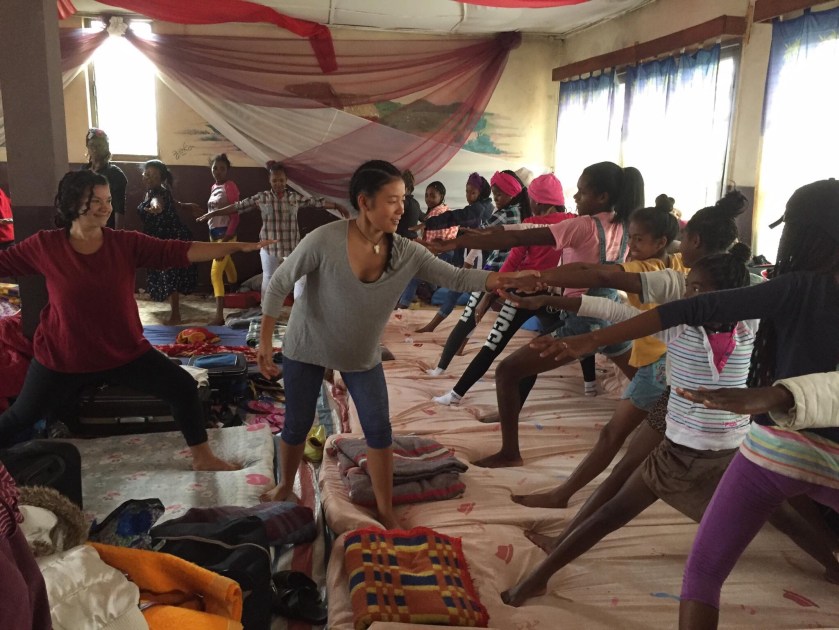
Last month, I brought five young Malagasy ladies to Antananarivo for the National GLOW Camp. GLOW is a Peace Corps initiative standing for Girls Leading Our World. The week long girls’ empowerment training was coordinated by a group of third-year PCVs and represented 8 regions and 4 dialects within Madagascar. This poem is inspired by that experience, and by all the amazing girls and women at my site.

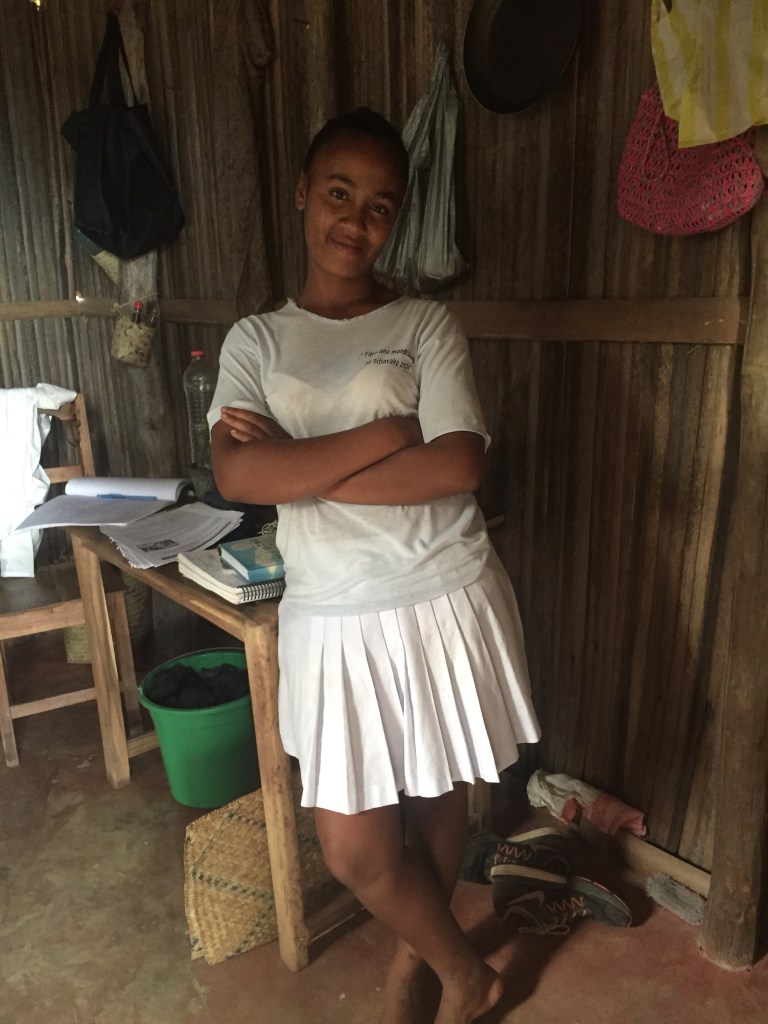
she balances babies and basketballs; walks barefoot in the mud. runs, no sports bra, not afraid of her body. that body gives life.

Photo Credit: Kamaka Dias

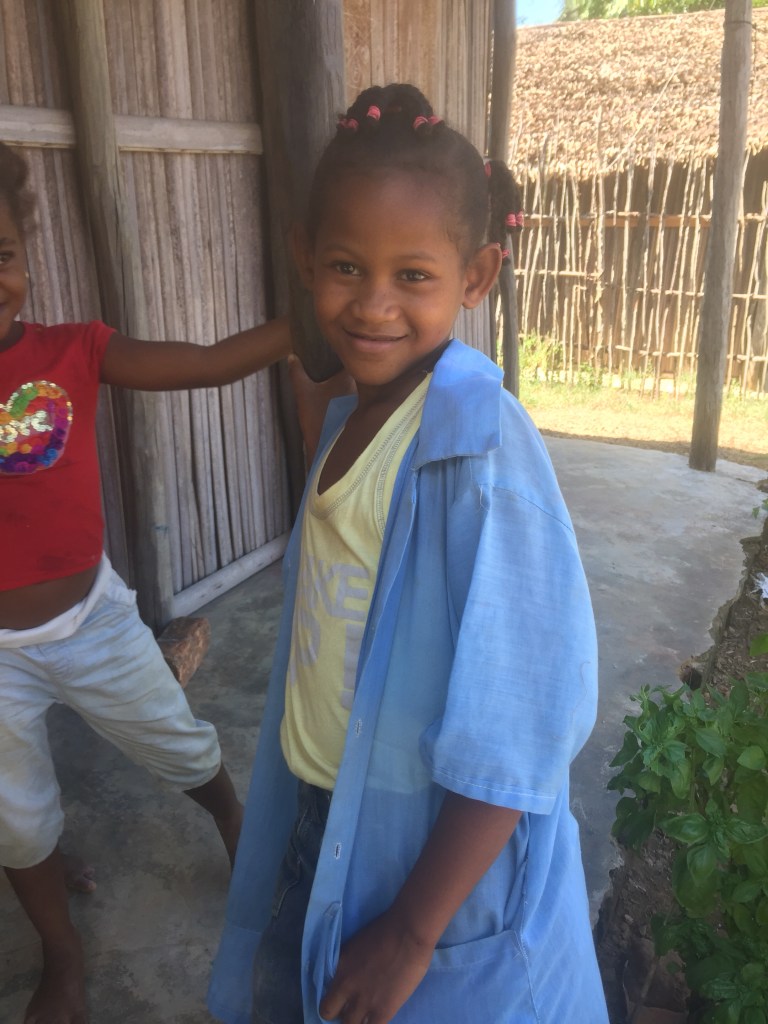
she copies lessons, stands up in class, asks and answers the questions. she does not lower her voice.

she feeds her parents, her siblings, herself. cooks rice on open flames, cleans pots with sand, her feet the pumice, her heels digging in.

she rides her bike to rice fields; she plants and plants and plants. pulls buckets of water from the well, balances on her head. children follow. one day they’ll do the same.

she holds hands and giggles, laughs, flirts, bats her eyes. wears perfume. can be shy. or is it mysterious?

she cries. and if someone dies, she wails–not just for herself, but for all women and all men because men aren’t supposed to cry. she leads. she follows. sings, teaches. teaches me. dreams. She is my teacher. my role model. best friend and confidant. disciplinarian, idol. not strong like a man. she is not one. She is strength, itself. strong like a woman.

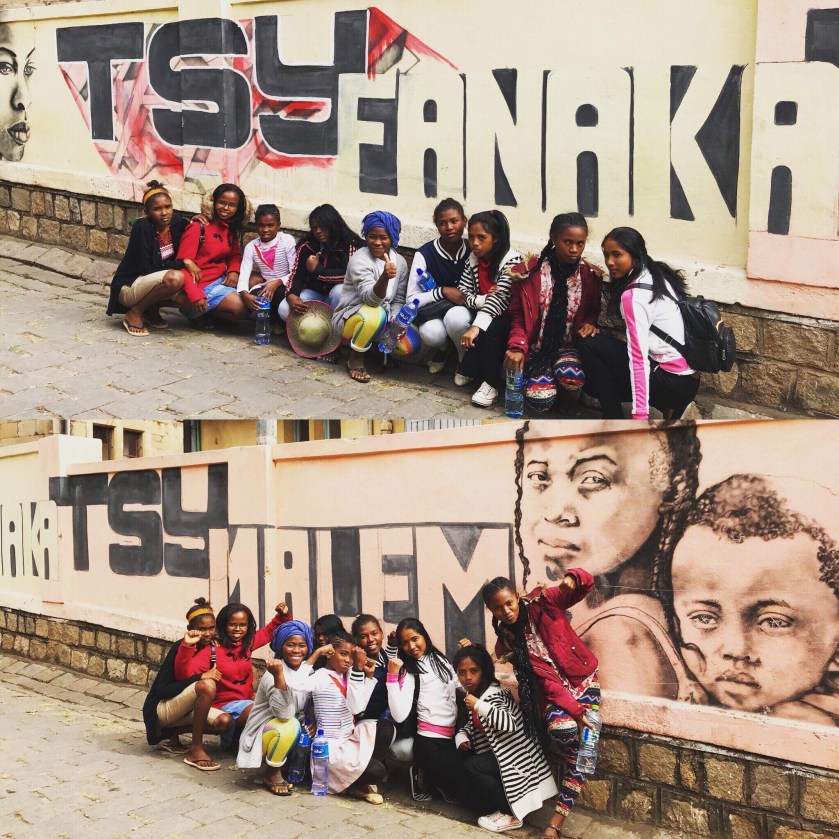
“Tsy fanaka tsy malemy.” Translation: women are not soft furniture. Photo credit: Stephanie Sang

Reading Standing Up

This morning I read Green Eggs and Ham to a group of my sixth graders while standing in an empty classroom. They sat on the floor or leaned against the wall. There were no desks.

To be clear, we usually have desks. At the beginning of every “typical” school day, I walk in and my students stand as I wind my way through the sea of bodies squished behind desks to the blackboard. I greet them, they sit, and I begin writing the lesson on the board. They copy what I write into their notebooks. This routine is familiar to me by now; I’ve been teaching in these classrooms since October.

My students typically sit cramped in rows of four to a desk, although the class has been growing increasingly spacious since January. Some students run out of money and can’t come back. Others, bored with the system, hot and uncomfortable and tired of trying to squeeze into an overheated cement block, just stop coming. Part of me doesn’t blame them. The classrooms are hot and crowded and noisy. Students talk over each other, and because they aren’t scared of me, they don’t often stop talking when I ask them to. Other times, I’ve come to school only to find that the person who has the key isn’t here, so we’re not learning today, or there’s a meeting, so we’re not learning today, or the other teachers aren’t all here, so some of us are not learning today. There are some weeks where I don’t teach at all. If I had to walk miles to and from school every day like most of my students, I would probably give up too.

Still, yesterday I was filled with motivation to deliver a compelling lesson. We didn’t learn last week; my school hosted a local sports competition. Students and teachers and school directors from all over had some, camped out in classrooms and competed in soccer, track, and field. Most of the mess had been cleaned up the day before. However, as I got to school and saw all the students in their crisp Monday uniforms sitting idly outside, I knew something was up. It appeared that someone had forgotten to return the desks to the classrooms, so there were no places to site and copy inside.

Well I have spent enough time learning in stairwells and outdoor auditoriums and on floors and beanbag chairs to know that desks are not necessary. Sometimes they’re even inhibiting. “We are still having class, damn it,” I thought to myself. I didn’t want to go home. I’m tired of giving up and going home.

But without the desks, my students felt uncomfortable. They couldn’t copy down a lesson, but I didn’t care. I didn’t want them to copy today. I just wanted them to listen. I pulled out a book, Green Eggs and Ham, and wrote the first few pages on the board.

I wasn’t sure how the reading would go. After all, green eggs and ham aren’t even a real thing. But there I was, standing in the middle of that cement block with a Dr. Seuss book in my hand and forty pairs of eyes on me and suddenly I felt scared, exposed. What if they laugh at me? What if they make fun of what I’m trying to do?

I read slowly and loudly, animating my voice and gesticulating wildly to hammer home the meanings of certain words. I did “the librarian thing,” that thing I have watched countless adults growing up do, where you read a page and then parade the open book around the room so everyone can see what you’re talking about.

I realized that Green Eggs and Ham is awesome for pronunciation practice. Halfway through, my students started repeating: “not, not, not.” I’m not sure if it was intentional or not.

“I do not like them,” I repeated again and again and again.

“Zaho tsy tia” I heard them whisper to each other. They were translating.

I finished the story and asked if it was clear. They nodded. Then I asked if someone could explain it to me in Malagasy. Eyes darted awkwardly around the room. “Ok, should I read it again, then?” They smiled and nodded.
Wooden Needles

Give me a needle.

“I don’t have one.”

Ok, then give me a knife.

My ten year old host brother eyes me suspiciously. “You really don’t have a needle?” Wait a minute. I go inside the house. I did have one at some point, but it seems to have disappeared under piles of rubble, clothes and books, a hammer and nail, stacks of student exams. I sigh and go back outside. “No needle.” “Ok, give me a knife,” he responds. I stare at him. “Why??” I ask incredulously. “Are you going to cut part of your finger off?” He has a wound on his thumb. “No. I’m going to make a needle out of wood.”

Oh. I never would’ve thought if that.

I go inside and get my paring knife and give it to him. I watch him whittle down a stick until it’s sharp and fine at one end. Then he raises his swollen thumb and pokes it. Out oozes disgusting, grey-green pus. He winces, but doesn’t say a word.

“Can I have some hot water?” he asks me. Yes! Of course. There is something I can contribute. I have no idea what his maladie is or how to treat it, but dammit I can give him some hot water.

I go inside and fill a pot, then set it on my gas stove and turn on the heat. Outside, my host brother’s thumb is now bleeding, but the pus is gone. This looks like a good sign.

“Just a few minutes,” I say, and I go back inside where the water is already boiling–the secret blessing of self-lighting gas stoves. It’s a luxury here for sure.

I bring a can of water outside to him. He touches it with his unhurt hand. “It’s still too hot.” “Then we’ll wait,” I say, and I sit down beside him. The two of us lean against the wall, staring out over my gate. We wait in silence. I don’t know what to say. There’s still a lot of medical vocabulary I don’t understand, not to mention the types of maladies that can occur here from plants and animals. Living is an occupational hazard.

When the water cools, he pours it slowly over his thumb, a little at a time. I watch him work, his eyes sharp and his hands steady. He’s about eleven years old. Did I mention that?

He shakes his finger. “Pare.” Ready. He blows on his thumb, and that’s that. The worst is over. And now, like so many other things in the country-side, we wait.

My host brother and I on a non-injured day

The Hills of Fianarantsoa, Madagascar’s San Francisco

We roll in late Saturday evening. Looking out the window, I see lights bobbing through dark windows in houses, dancing along the hills. I rub my eyes, still groggy from the ten hour drive from Antananarivo. Am I in San Francisco? In the dark of the night, winding through city hills, I think I could be.

Fianarantsoa is the fourth largest city in Madagascar. Its residents are the ethnic group Betsileo, who speak slowly. With my aggressive Northern dialect and cornrowed hair, I feel very out of place. But fortunately, that doesn’t last long. The fresh air, magnificent hilly views, cheap food and Gasy hospitality won me over. I’m hooked on the Southern Highlands.

Sometimes all you need is a little change in perspective…and cornrows.

Early next morning, we wander down the hill from our house to find coffee and mofo, bread. We pass children in brightly colored school uniforms, seas of blue and pink and magenta, backpacks perched and ready for the day. Men and women accompany them in business suits and jackets, women fashionably decorated with tasteful gold earrings, rings, and bracelets. Lining the streets are teams of mpivarotras, men and women selling clothes and shoes handing in wooden stalls or spread out on the ground. They sell roasted peanuts, yogurt and mofo on the sidewalks. I climb up to AnZoma, one of Fianar’s biggest market squares, and fall into a now familiar routine: bargaining.

My eyes fall on the goony sacs below, spilling over with rice and beans and fruits; avocados, tomatoes, garlic the size of a child’s fist. There are bunches of bananas weighing four pounds each. There are pumpkins as big as my head. I squat down and greet the seller with a familiar greeting, though it’s different from my dialect’s own.

Salaam e! Ino vaovao? —Mangina-e!

Hello! What’s new? –It’s quiet!

I knew this greeting from Pre-Service Training, which took place in the Northern Highlands. My Antakaragna accent is obvious ands I smile sheepishly. “Hoachino ma ty?” I ask for the price of beans. Fitonzato. Seven hundred ariary for a cup, about 25 cents. It seems fair. I order two cups worth and help her pour them into my sac. I add some onions and garlic to the pile. We exchange money and pleasantries, and I go on my way.

Fianar is not what I expect. It’s bigger, livelier, friendlier. We climb the top of the tallest hill and take in the view, and for a moment I forget to breathe.

Taking in the view of Fianarantsoa, Madagascar’s fourth largest city.

On our way back down, we pass through Old Town, the only UNESCO World Heritage Site in the country. A towering church, cobblestone streets, and the ruins of the late Queen’s palace can still be seen, only now they serve as a playground for school children and an ice cream shop for hungry locals and visitors exhausted from the hike up to Old Town.

Old Town Fianarantsoa, a UNESCO World Heritage Site

There’s more to see in the Southern Highlands than I expected. For my first trip south since being I’m country, it was a pretty good one.