Blog

The World Map Project

The idea is “do something to make the world more beautiful.”

My childhood manifesto still beats in my heart. I tend to take myself way too seriously, but sometimes life really is this incredible.

26063224_10213535119243828_1860937768_o
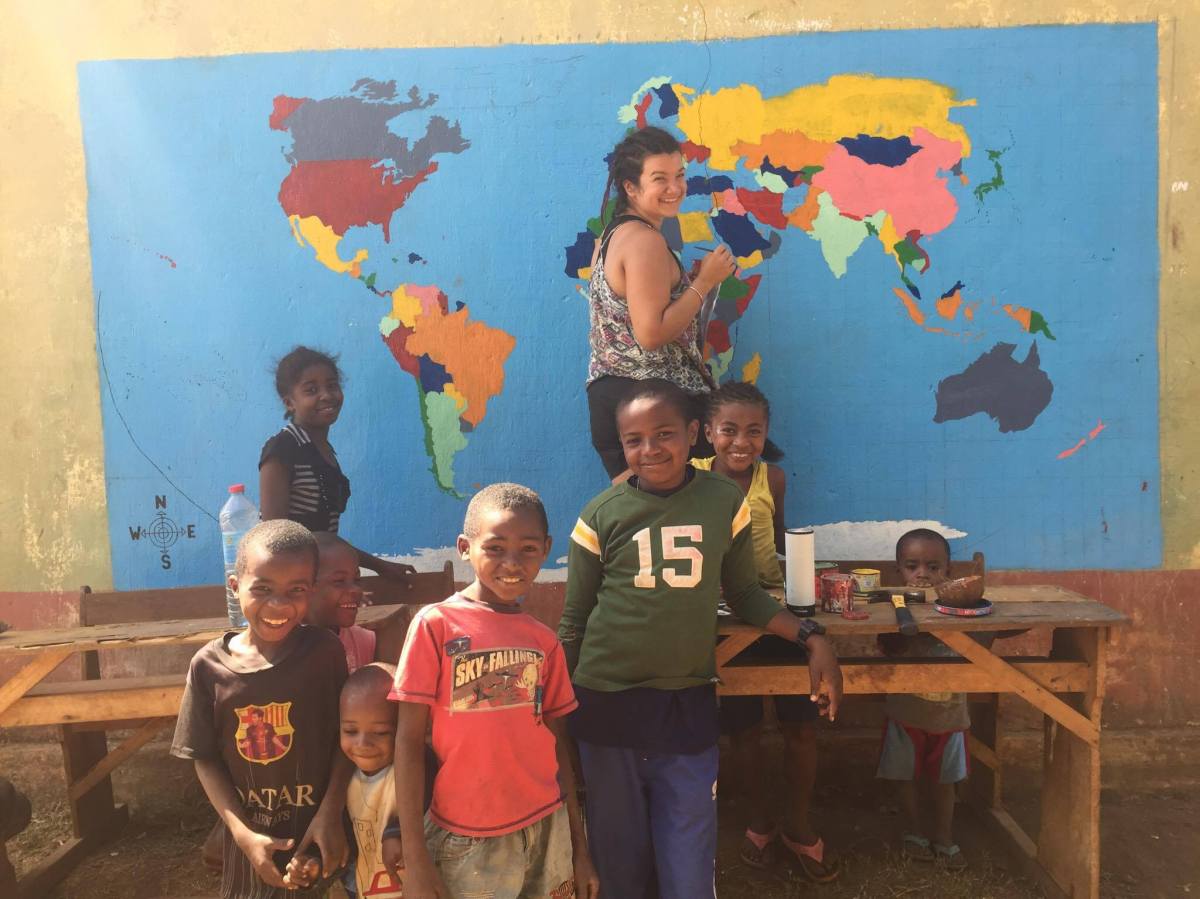
posing in front of the formerly blank wall

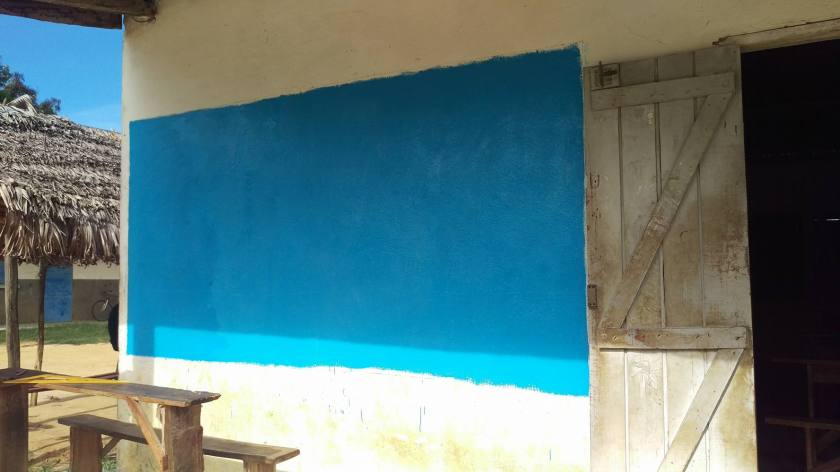
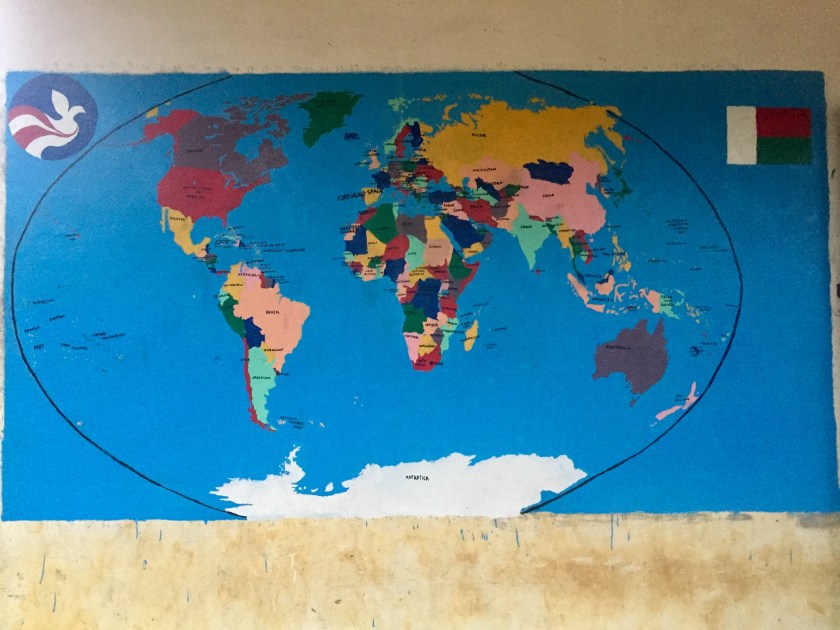
We painted a world map on the outside wall of the 6eme classroom. It’s the wall that is most visible from the dirt road connecting the school compound with the next community. When we began, we had a blank wall with some graffiti on it. The first step was to draw a giant rectangle and paint it blue. That raised a few eyebrows.
26102101_10213535118523810_1289766423_o
nothin’ but ocean

Next, we drew a grid: 30 rows tall, 50 rows wide. 1,500 squares, five centimeters by five centimeters. From the road, our pencil lines were not visible, so the confusing stares continued as people passed us doing seemingly invisible work. This went on for two days. We fed ourselves from a giant pot of coconut beans and rice. Then we continued to work. We started to stencil in the countries, using a piece of paper as a reference point. Each square represented a tiny portion of the map: disputed borders between countries, groups of islands, land masses, oceans. We actually drew it all.

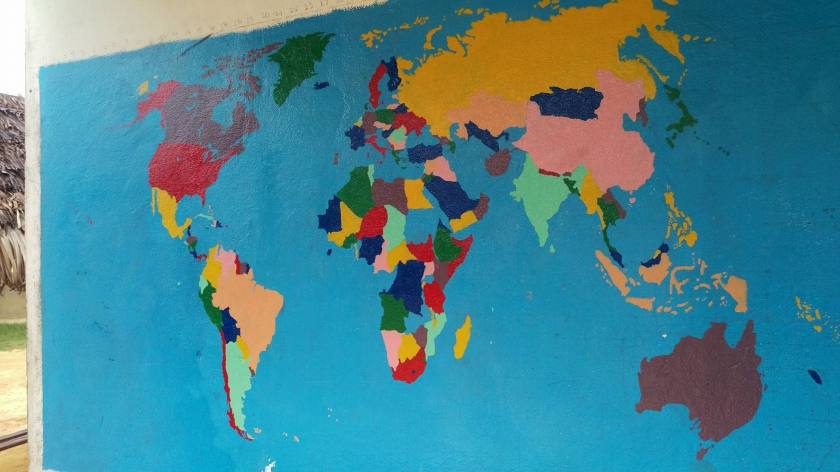
On the third day, magic happened; color appeared on the map. From what was once a blob of light blue paint emerged distinct, unique lines and squiggles, each a different shade of blue, orange, green and red, signifying ownership: this large, upside down orange triangle represents Brazil. These tiny red dots in the Pacific Ocean are the Polynesian islands of Vanuatu. This long yellow blob, right smack dab in the middle of the map, is Madagascar.

Now we’re getting somewhere.

26132594_10213535119283829_107278635_o
my crew

As nations began to emerge, so did people. We had an audience by day three, sitting under a shaded roof and watching us paint, laughing at our silly dance moves and sometimes coming closer to ask questions or lend a hand. By day four, the paint was dry and we were ready to label. Writing the full names of each nation across its land mass was…frustrating. Try writing Boznia and Herzegovina next to Montenegro, all within a two centimeter surface area. It’s tough. But we prevailed, and we insisted, because without names, the map is just a picture. But with names, it became a portal.
26104924_10213535118603812_739141063_o
almost finished adding colors…can you spot which countries are still missing?

“Oh, so that’s where Brazil is.”

“Where’s Russia? I want to go there for the next world cup.”

“Where are you from, Melanie? Where is Memphis?”

I smile, I point, and then I step back. I watch as my friends and neighbors and former strangers talk and point and share stories, their eyes glued to the blobs of blue and orange and red and purple that signify culture and success and struggle. I hope they will continue to stare and ask questions and share stories long after I’m gone. I hope the paint won’t fade, or if it does, I hope someone will pick up a brush and make Australia bright purple again and Philippines that shiny yellow. I don’t know if this map can change anybody’s life, other than my own. The map has changed me because, in that moment when I walked in the mud and the rain to the office of my School Director to say, “It is finished,” and in that moment when he came over to look and made a speech to say thank-you and applauded, I knew he was energized about what I had given him, and I knew that in that moment he respected me, and I finally felt understood.

I don’t know if that will continue. But whenever I walk to class from now on, I can look up and see the world. And so can all my 450 CEG students. And so can my colleagues. And so can the rice farmers. And that, I think, makes the world a little more beautiful.
FullSizeRender
the finished product


Porch Stories

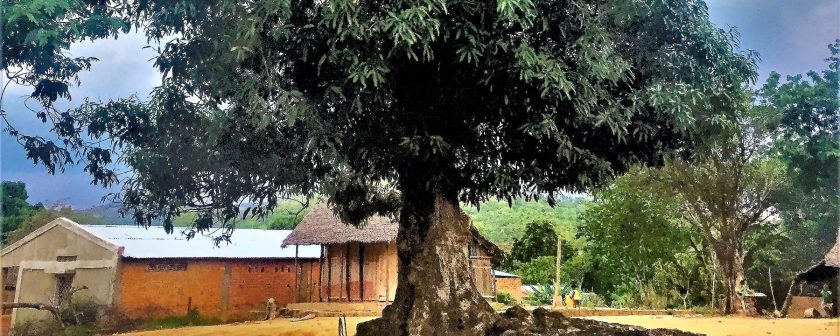
The days are getting longer, and hotter, here in the Avaratra. By 7 am, I am already sweating if I’m out in the sun. Fortunately, there is a brilliant, man-made structure that combats heat, invites company, and calms my soul: the porch.

I am blessed with a cement floor that extends about three feet past my front door, and a ravinala roof to cover, providing sweet shade, a necessarily relief from the beating sun. It’s often cooler outside, under my porch at midday, than it is inside.

Suffice to say, I do a lot of sitting on my porch. I was dishes and clothes, I grade papers, I eat lunch, I journal, all on my front porch. My view is the houses across from me, the mountains in the background and, if I’m lucky, the wispy pink strokes of a sunset. My entertainment is the cast of characters whose home I am visiting: the neighborhood boys and girls chasing each other around; my students on their way to and from school; women selling fish, selling beauty products, selling bananas and angana in big baskets balanced effortlessly on the tops of their heads; men riding bicycles; whole families riding in ox-pulled carts.

At first, I felt very self-conscious being in such conspicuous view of the whole neighborhood. Every time I brush my teeth or wash my hands or even just open my door, someone is there, watching me. At first, I got a lot of stares (and a few jaws dropped…and lots of laughter). But now, thankfully, most of that has died down. Instead, I get a familiar greeting, a morning song that I like to sing with everyone:

Mbolatsara!

     -Salatsareeee. Ino vaovao?

-Tsy tsy. Maresaka?

      -Mangina foeeeee!

And so it goes.

People in town know me now. But when visitors come, they are still gaga (surprised) to see a white girl, sometimes with braids in her hair, washing her clothes out of a plastic basin on the front porch of a Malagasy home. I still smile and nod and greet them, and they laugh, mostly in good humor, and move on with their lives.

I remember when I first got to site, I was overcome with anxiety about how much sitting everyone seemed to do. “People just sit, all day, on their front porches. They don’t go anywhere and they don’t do anything.” Well, of course that’s not true. People work all day, and they go to the rice fields and they go to other towns and they go to visit people and they go to church and mosque and the market. But it is true that people do a lot of sitting on porches. And now, I’m one of those people.


Yeah, I’m a little gaga, too.


cropped-img_4736-211.jpg
View from my front porch


Breathe In

Last month I got participated in my first world map project at a friend’s site up north. Read more about it here!

recklesslyfreckling's avatarrecklesslyfreckling

This story is written for the prompt ‘regional success story’, sent out by Peace Corps Madagascar.

If you were to line up the Peace Corps volunteers of the north, what would you see? The obvious at first: some tall, some short. Mexican American, Indian American, Dutch American, freckled. Cheesy smiles, laughs, a few glares, and maybe a scoff. You might guess by their attire who is artsy, analytical. It will be clear who is fashion impaired. Your intuition might point out the art history major or the one holding a law degree. You have been so focused on what distinguishes them you can’t imagine what they have in common. What is the glue keeping this grab bag of shapes together.

What keeps them together is what keeps them alive. What drives them.  It’s as if they breathe it. To them, curiosity is right next to oxygen on the table…

View original post 407 more words

Dahira

There was a party in my neighborhood last Saturday. I didn’t know what it was for, but I knew something was happening. My friend Kodotsia had already made me a salovana (a long dress that is tied at the chest and often worn on festive occasions) from a beautiful red and white pattern. Florosia had braided my hair with extensions. They’d been talking about this all week. But still, I had no idea what was actually happening. My language skills are so limited that most of the time I just watch someone talking words to me until I hear “Alo, atsika,” which means “Let’s go” and then I follow people. Ah, adjustment.

7 am: Kodostia calls to me from outside my wooden gate. She’s already wearing her salovana. I was still sleeping (I’m used to sleeping in, but that’s not really a thing here…).

“Oh, you’re not ready yet?” She looks at me confused. I’m still half asleep.

“Okay, I have some clothes left to wash, so I’ll come get you a little later.”

I’m never sure what “later” means.

9:00 am (ish): I’ve been sitting on my bed, dressed in my salovana for an hour, because I didn’t want Kodostia to come back and me still not be ready (I hate being late). After a while, four girls appear at my door. They are wearing salovanas with matching headscarves and beautiful jewelry. They are carrying buckets and large wooden spoons and pots. A boy is with them, carrying a huge sack of what turns out to be rice, on the seat of a bicycle. They beckon me to come with them.


IMG_4415.JPG
my guides for the day, ready to magnanao fety (have a party)


We walk a little ways into a forested area and sit under the shade of a large mango tree. There are a few older women there as well. Almost immediately, the women pull out “sahafas,” circular trays that are used to clean rice, and we start to pick rocks from the rice and throw them out. I’m used to this, so I invite myself to join in the rock-picking. It’s surprisingly meditative.

As we pick rocks and sift rice, the girls start asking me questions about America. I try to answer as best I can, but it’s hard because I’m still so self conscious about wearing a dress that I’m not used to and constantly adjusting my bum because I’m sitting on a tree root and my legs keep going numb. Still, I smile, because they’re obviously having a good time, so why shouldn’t I?

IMG_4417
pre-party selfies

12:00 pm (ish): The rice, I soon learned, was being cooked to feed several hundred people. The women who seemed to be in charge cooked it in enormous pots, big enough for a child to take a bath in, and I smiled because it reminded me of the book Stone Soup. Once ready, the women served the rice on large platters and placed a plastic bowl of beans in the middle. My new friends handed me a spoon and then we squatted on the ground and ate together, from the same platter, taking small spoonfuls of beans and mixing them with the rice.

After lunch, there was music and dancing. The crowd had grown to at least a thousand, with families and friends camped under mango trees, eating and talking and napping. It reminded me of Sunday afternoon at Overton Park in Memphis. A crowd was gathered around a clearing, so I went to see the entertainment. Two men about middle aged were standing and beating large oval drums. A third man blew a conch shell. Then two men and two women appeared dressed in red and white clothing, two with headdresses that bore the Muslim crescent moon, and two with staffs. They danced. The dancing was aggressive yet calculated, their feet moving rapidly in time with the drum beats, like walking on hot coals. A group of women and girls sat nearby under a tree and sang.

It’s hard to describe my exact feeling, but something about this moment, watching the dancing, being part of a crowd of spectators, felt familiar to me. I had no idea what the dancing meant and I wanted to know, but in a broader sense, I knew it was telling a story of something important. It made me think of the revolutionary war re-enactments we used to go see in Plymouth, Massachusetts (don’t ask me why, but it did): men and women dressed up in costume, performing something meant to remind the spectators of some important part of a shared history. That’s culture…ritual, reminder, togetherness. It’s so familiar. And yet it’s so unfamiliar. Two different stories coexisting rather than contradicting: is this what my boss meant by “the paradox of two truths?”

“Do they do this in your country?” Someone asked me. My first instinct was to say, “no,” but then I thought of Native American ceremonies that I’ve only witnessed a small handful of times and there was something about the honor and majesty of those ceremonies that seemed apropos in the context of this celebration, so I said yes, only to realize that I had no idea how to explain Native Americans with my ten words of Malagasy, so I think I said something like “people from a long, long time ago before white people went to America” and then smiled and pretended not to understand anyone else’s questions because I  was still in my very strange dress with braids in my hair, standing under a mango tree in the North in Madagascar, eating rice on the ground with a spoon.

It was a very good day.