Counting the Constellations

“This is it,” I said to my dad over the hum of the pool filter as we dipped our feet in blue-green water. We’ve both been dreading this moment. Tomorrow my father, my favorite person on the planet, leaves for Chicago. This Sunday, I leave for Pennsylvania, where in a few days I will depart for Massachusetts for a month-long internship. Then, three days later, I leave for Thailand. So this is the last time I’ll see my dad for a while.
 
Not that we haven’t gotten used to this. For the past three years, I’ve been living up north, going to school and visiting Memphis on Christmas and summer holidays. But this time it feels much more permanent. I know it isn’t so; I know I’ll only be in Thailand for a year (at least). But I’m going so far away.
 
Now is the moment when I need to tell myself to take the plunge. You can do this, Melanie. You want to do this. It seems like every time I come back home, I grow more comfortable here. Yet at the same time, I’ve been getting very antsy. I feel misplaced, though I’m very happy to see my family. I can’t get over the unease and unrest of staying at home, no matter how hard I try. Maybe I was meant to wander.
 
I thought about this as I looked up at the black sky above our chlorinated pool. I thought of my stay in Sde Boker with some of my class from Ben-Gurion University in Israel. We had become temporary refugees in the small kibbutz town after fleeing the city two Novembers ago. Then, like now, I felt trapped and claustrophobic.     
 
Yet I remember how infinite and limitless I felt when we walked to the edge of town after supper in the neighborhood cantine. We sat upon sand dunes and looked down into the massive caverns below and beyond: the craters of the Negev, blue and black under the bright moonlight. Shoshana played guitar. I looked up at the stars in the heavens. “Where is the big dipper?” I asked. “Here. And look! There’s Orion’s Belt.” Together we named constellations and made up names for the ones we couldn’t guess. We sang songs, passed cigarettes, laughed and joked and commiserated about the bizarre turns of fate that brought us together, trapped tourists in the desert. There we were, in the middle of a war that wasn’t ours, yet suddenly caring so much about the outcome. With all that chaos going on beyond our reach, I felt strangely comforted knowing that, for everyone in the world, the constellations were the same.
 
I felt this now, talking with my father in the pool, looking up at the constellations. I see the Big Dipper. And Orion’s Belt. And I know I will be okay.
An Homage to My College

“Now that you’re an educated woman, put it to good use.”

This is what my professor told me on the last days of college. “But what about before I came to college?” I thought naively. Was I uneducated and therefore useless? I doubt that’s what my professor was implying. He was implying that education is a gift, one that comes with a heavy price tag–metaphorically as well as physically. Women and girls all over the world are being punished for trying to unwrap this gift, a gift that many argue should be an unalienable right.  Still, his comment came at me like a blow to the head. It struck me as a “call to action.” I’m ready, I thought, to battle evil: let me go put on my superhero costume adorned with the letters “EW” (Educated Woman) and rescue the poor and oppressed, so that no one will suffer anymore. Right? Right??

I think I’m wrong and I wonder if I am not alone in the pool of recent graduates who feel that their ideals and their realities don’t quite align, since newspapers and journals now report that degrees are the cultural equivalent of incomes–necessary evils, almost accessories to your life, or something to put on a resume. Holding a degree does not change who I am. To me, the experiences of college are far more valuable than a piece of paper or moving my tassel from right to left. In college, I felt like my words mattered. I found myself in intimate situations with classmates and professors, arguing over the conditions of our time and of ages past. But nothing we said or did changed anything…so what use was it? 

We weren’t changing the world, we were changing ourselves. We were being changed, unbeknownst to us. We were, I hope, learning empathy and compassion, something that this world could use a lot more of.  We learned, I hope, to respect other people’s opinions, even when they are so different from our own. This isn’t easy. So many times I wanted to shout in class, “you’ve forgotten that Christ already saved the world!” or something to that affect. But I think no one would have taken me seriously.

Maybe I’ve taken myself too seriously all along.  There’s so much amorphous pressure in college that I think we put on ourselves because we are so afraid of disappointing the ones who made this experience possible. College is not cheap. It is an investment (we’ve all heard that before, right?)

I heard in a lecture once that the speaker would rather his son be “a good person than successful, and I hope you would, too.”  How strange, I thought. Don’t parents want their kids to be happy, and doesn’t happiness mean success? Perhaps not. Perhaps success is not the best way to measure happiness.

Despite that revelation, I want to say from the depths of my heart, Thank You, to all the parents, friends, teachers, coaches, roommates, bosses, boyfriends, girlfriends, and pets who have cheered us all on, dried our tears, and listened to us complain non-stop about our Intro to Meteorology classes. Because without that love and support, we would be both miserably unhappy and unsuccessful, in any way you measure it.


But I hope that you know that I don’t want to be successful.  I want to be a good person, and I hope you do, too. 

With love,
Mel

Growing Up

One day when I was in Israel and the war was going on, my friend Sarah told me of a friend she had had in the army. Her friend had said to her once,  “Why am I here? Why am I learning about guns and military operations? I should be learning art, romance, opera, love.”

I turned to Sarah and I said, “I came here because I told myself, ‘Why am I not here? I am wasting my time studying art, romance, opera and love. I should be studying politics, military operations, guns.”

I wanted to understand the world.

But does this mean understanding guns?

Can you really ever understand guns?


I fear I’ve been judging reality and approaching life in a horrifically naive fashion. Because truth be told, people are just overgrown children with guns. There’s no secret that justifies war, ever. 


It’s symptomatic of studying the Holocaust. At a certain point, horrific details begin to become normal because you’ve become accustomed to the descriptions.

But these things are not normal. Not normal for a world that was created by God out of love. Not normal, ever.

Perhaps my existential crisis was brought on by, in addition to having spent the last six hours in the library, a poetry workshop I had the crazy pleasure of attending last week. The workshop, to my unraveling, encouraged word diarrhea, which is never welcome in military situations, nor in–let’s face it–some academic settings I’ve found myself in lately.

The funny thing is, we were specifically instructed not to talk about abstract concepts like war or poverty. Yet of course I did, because I’m slightly sadistic and moody. So, under a list of “Things I Know to Be True,” I wrote this:

4. War is never justified, but it is always justified until someone renames the war as something like “an operation” [which they did when I was in Israel] or “experiment” [like German medical experiments..]. That’s how you know that the person renaming the war is just as scared as the people running away from missiles. I know this because I ran away from missiles last year. They were small and wimpy, but no one appreciates blocks of metal raining from the sky. Maybe the only thing worse than hiding from a rocket in a cement underground is lying on your belly in a moving train with sirens blaring in the background tell you you may not live to see your sister step off the plain in Tel Aviv.

My handwriting had grown messier by this point and I admit my heart was pumping a little bit faster. This was when my instructors said “stop.”

This was why I thought I should understand politics, because maybe I could tell people that war is bad. But surely other people know that too?

They do, yes, they do. I’ll bet both arms the thousands of people afflicted every second by civil war know that it’s bad. It doesn’t take an education or a fancy suit to know right from wrong, but it does take a little bit of courage.

Maybe I’m being melodramatic and extremely selfish. Here I sit, safe at home in suburbia, tucked away from harm with a blanket of freshly fallen snow waiting for me outside. Yet I’m beginning to feel restless again.

“Not all those who wander are lost.”

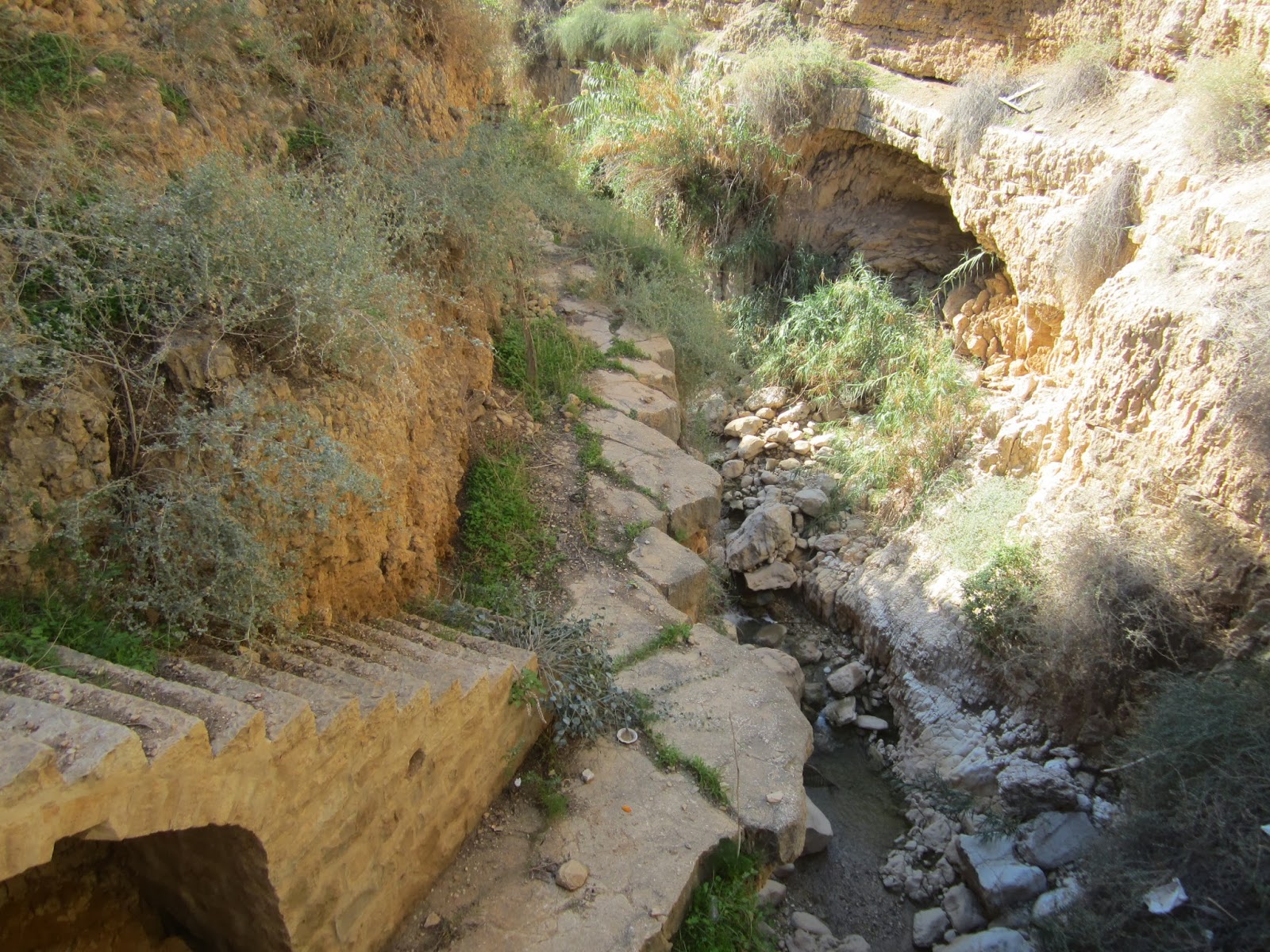
A small river flows beneath a sixth century (?) Greek Orthodox monastery
 in the mountain deep of a desert expanse separating Israel from Jericho in Palestine.


The Art of Calm (A trip to Kentucky)

Kentucky is a beautiful state. I never appreciated this growing up, because (and I honestly have no idea where this came from) I had a deeply-seeded resentment of anything south of the Mason-Dixon line. Still, late fall, stress from school and eventual early adulthood brings with it dreams of hibernation, home and pie. Being able to  spend all day in pajamas is also high on my list these days. So after coming back to Memphis to visit my family for fall break, we took a road trip to Kentucky. The entire drive, I stared out the window, slightly out of breath over the forgotten beauty of so many rolling green hills. It seems I’ve developed some kind of armor to protect me from life in the northeast and, in the process, I have neglected to look up at the sky. Like Icarus, I flew too close to the sun. It takes coming home to realize you never needed wings in the first place.

I won’t pretend I’m a sophisticated northerner. I speak more slowly than many people I know; I don’t own any Ray-Bands or black high heels or know all the subway lines in Manhattan. Still, I’m noticing some stark differences between the vast, expansive south and the busy, densely populous northeast. For one, in the drive from Memphis to Kentucky, I saw more trees than people. More trees, more leaves on the trees, more blades of grass, more fish in the lakes, even more clouds in the sky. There is somehow more sky.

When the only thing you have to contest your existence against is something that’s existed for hundred of years, like a tree, you suddenly feel very, very small. It’s almost impossible  be existential in a city! There are too many people telling you you’re wonderful, and not enough reminding you that the trees were here first.

Also down south, people…are just so friendly. I always thought this was a myth, that people in the south are friendlier than in the north. “Just because people down south smile and wave and say ‘hello’ as if they mean it doesn’t make them more friendly.” Perhaps I will test this some time and see how long I can talk to a stranger in Memphis or Bowling-Green before he or she gets bored or scared of me. But at least when people greet me with a boisterous “hello,” I know they really mean it. You know that awkward semi-acknowledgement of a stranger’s presence, where you’re too shy and too busy to be genuinely interested in someone else’s day, but you don’t want that person to think a bad thought about you so you smile and eek out a timid “hi,” and the other person blurts out, “Hihow’sitgoin’?” and then just keeps walking? Yeah. In the south, strangers greet strangers with genuineness. And they separate their words.

Perhaps what I’m experiencing is a bit of rose colored glasses syndrome, that feeling you get when you’re in a new place, when you’re exhausted from what you’ve left behind, and you look at your present surroundings with admiration and bliss. To tell the truth, I never thought so rosily about the south when I lived there.

In fact, all I remember dreaming of (aside from other planets) was my fantasized, grown up life in New York City. So perhaps now as a young adult, I’ve begun to reverse the fantasy and trade skyscrapers for landscapes and subway lines for tractors. Or haystacks…

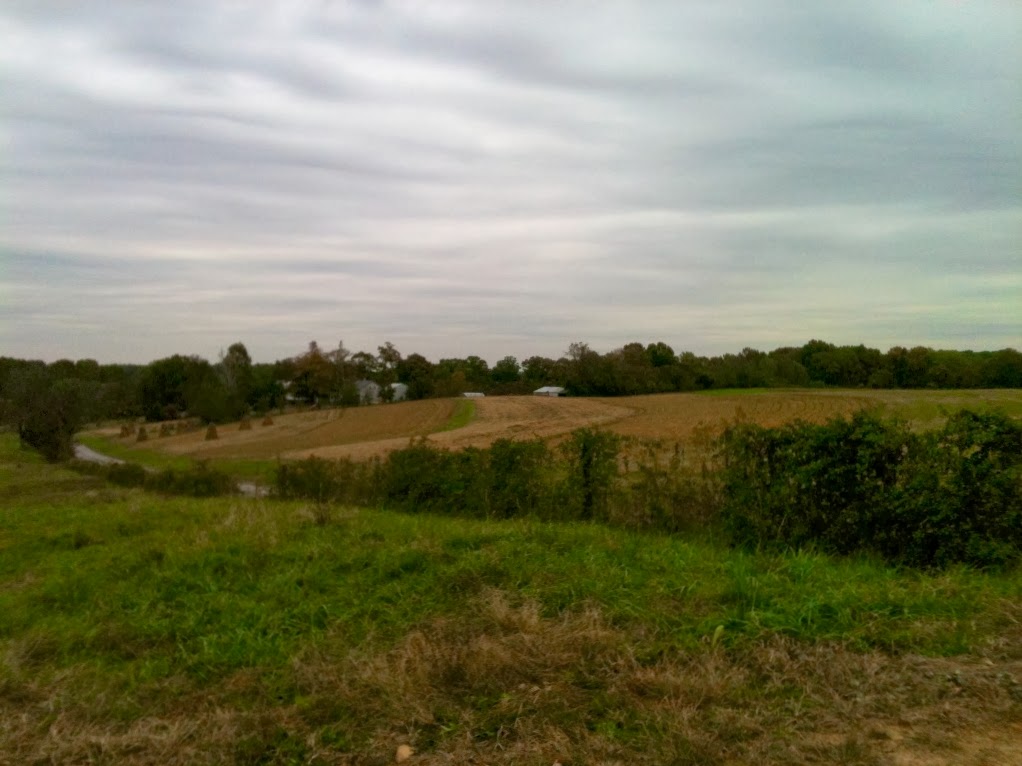
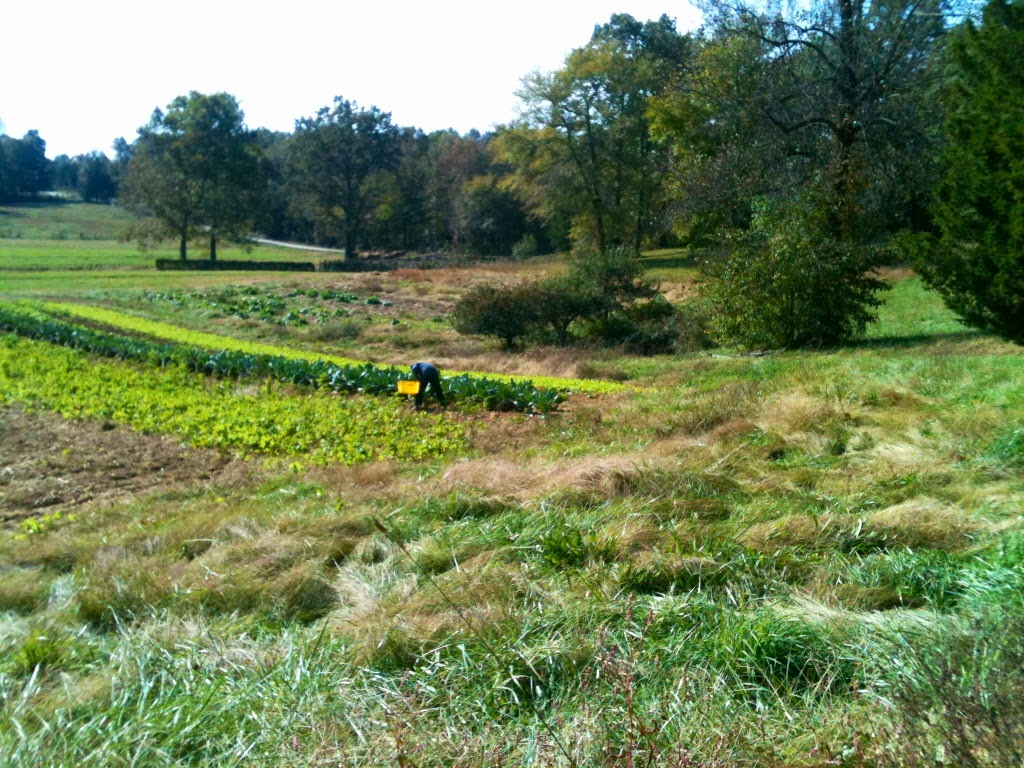
Our time in Kentucky was full of farms, animals, fresh air and Mennonites markets. I overheard the boy pictured at left (click to see the detail) speaking Dutch with his father, owner of the first Mennonite farm we visited, where my own father proceeded to buy over a hundred dollars worth of squash! Seriously.

I watched this boy, about ten, grab a basket and pluck a few leaves of kale from the stalk and then mosey on back up to his house, to sell it or to eat it.

I admit I was jealous. When I want to cook kale, I need a car, a shopper of the month card, cash, car keys, a wallet, and the patience to walk under halogen lights and stand in line at a conveyor belt while trying to ignore all the celebrity gossip and “HOW TO LOSE TWENTY POUNDS IN TWO DAYS!” advertisements.
.
Perhaps this trip was exactly what I needed. Blue skies and sunshine. Apple pie, baseball games, harmonicas and dogs on my lap. I had no idea I was so…American.

“Country rooooad, take me hoooome, to the place I beloooong!”