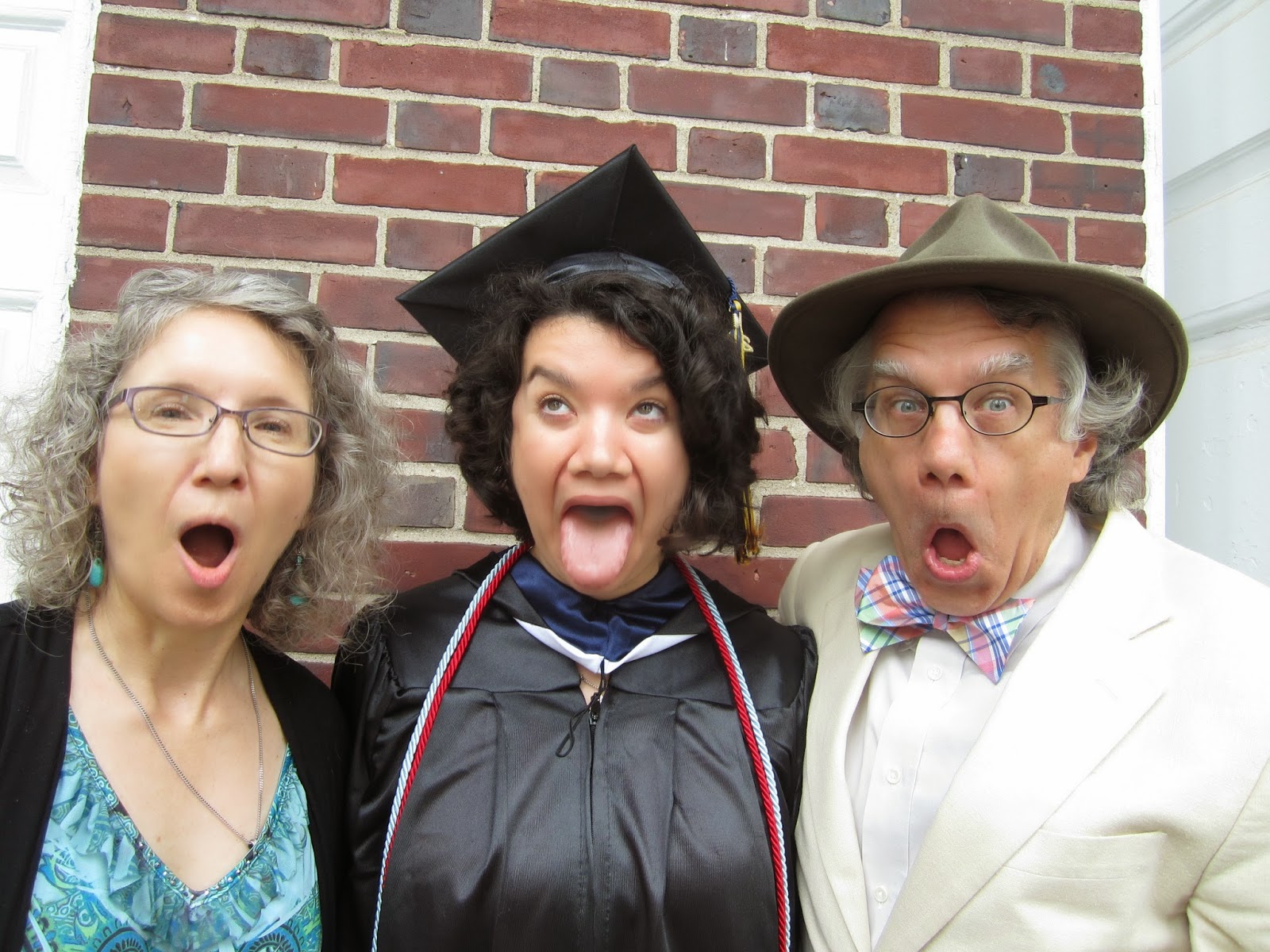
An Homage to My College

“Now that you’re an educated woman, put it to good use.”

This is what my professor told me on the last days of college. “But what about before I came to college?” I thought naively. Was I uneducated and therefore useless? I doubt that’s what my professor was implying. He was implying that education is a gift, one that comes with a heavy price tag–metaphorically as well as physically. Women and girls all over the world are being punished for trying to unwrap this gift, a gift that many argue should be an unalienable right.  Still, his comment came at me like a blow to the head. It struck me as a “call to action.” I’m ready, I thought, to battle evil: let me go put on my superhero costume adorned with the letters “EW” (Educated Woman) and rescue the poor and oppressed, so that no one will suffer anymore. Right? Right??

I think I’m wrong and I wonder if I am not alone in the pool of recent graduates who feel that their ideals and their realities don’t quite align, since newspapers and journals now report that degrees are the cultural equivalent of incomes–necessary evils, almost accessories to your life, or something to put on a resume. Holding a degree does not change who I am. To me, the experiences of college are far more valuable than a piece of paper or moving my tassel from right to left. In college, I felt like my words mattered. I found myself in intimate situations with classmates and professors, arguing over the conditions of our time and of ages past. But nothing we said or did changed anything…so what use was it? 

We weren’t changing the world, we were changing ourselves. We were being changed, unbeknownst to us. We were, I hope, learning empathy and compassion, something that this world could use a lot more of.  We learned, I hope, to respect other people’s opinions, even when they are so different from our own. This isn’t easy. So many times I wanted to shout in class, “you’ve forgotten that Christ already saved the world!” or something to that affect. But I think no one would have taken me seriously.

Maybe I’ve taken myself too seriously all along.  There’s so much amorphous pressure in college that I think we put on ourselves because we are so afraid of disappointing the ones who made this experience possible. College is not cheap. It is an investment (we’ve all heard that before, right?)

I heard in a lecture once that the speaker would rather his son be “a good person than successful, and I hope you would, too.”  How strange, I thought. Don’t parents want their kids to be happy, and doesn’t happiness mean success? Perhaps not. Perhaps success is not the best way to measure happiness.

Despite that revelation, I want to say from the depths of my heart, Thank You, to all the parents, friends, teachers, coaches, roommates, bosses, boyfriends, girlfriends, and pets who have cheered us all on, dried our tears, and listened to us complain non-stop about our Intro to Meteorology classes. Because without that love and support, we would be both miserably unhappy and unsuccessful, in any way you measure it.
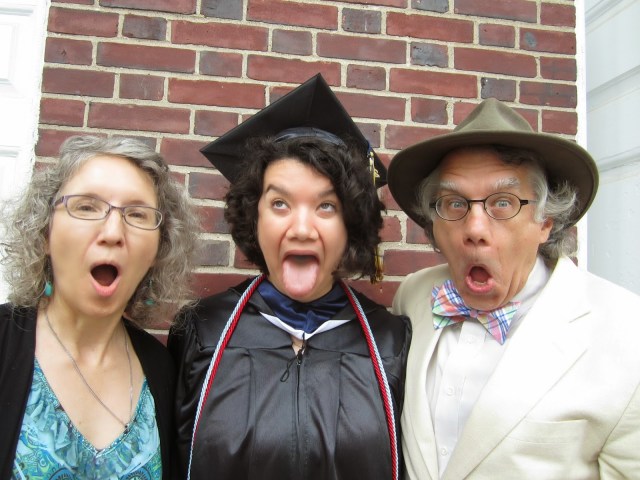

But I hope that you know that I don’t want to be successful.  I want to be a good person, and I hope you do, too. 

With love,
Mel
Growing Up

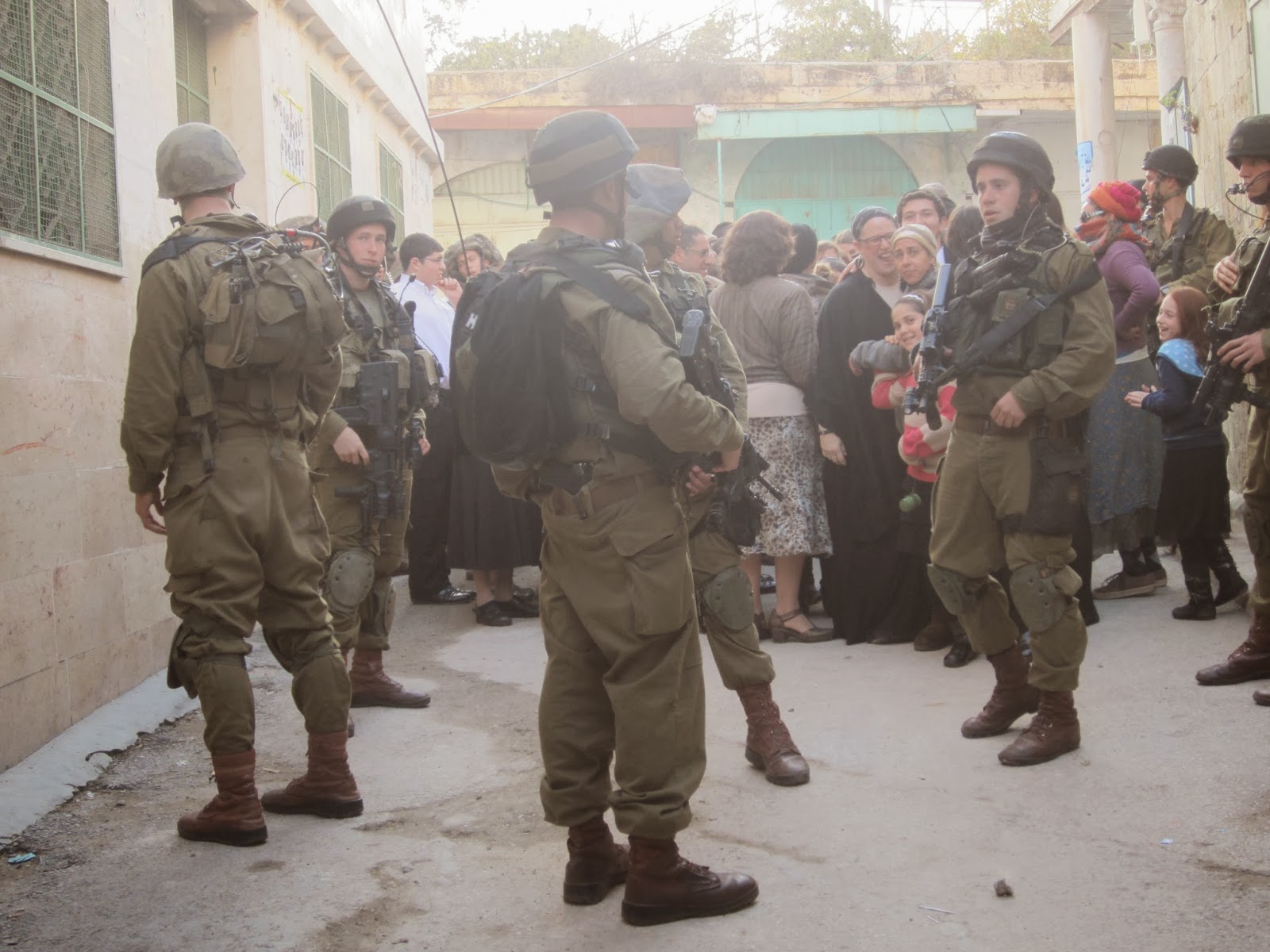
One day when I was in Israel and the war was going on, my friend Sarah told me of a friend she had had in the army. Her friend had said to her once,  “Why am I here? Why am I learning about guns and military operations? I should be learning art, romance, opera, love.”

I turned to Sarah and I said, “I came here because I told myself, ‘Why am I not here? I am wasting my time studying art, romance, opera and love. I should be studying politics, military operations, guns.”

I wanted to understand the world.

But does this mean understanding guns?

Can you really ever understand guns?


I fear I’ve been judging reality and approaching life in a horrifically naive fashion. Because truth be told, people are just overgrown children with guns. There’s no secret that justifies war, ever. 


It’s symptomatic of studying the Holocaust. At a certain point, horrific details begin to become normal because you’ve become accustomed to the descriptions.

But these things are not normal. Not normal for a world that was created by God out of love. Not normal, ever.

Perhaps my existential crisis was brought on by, in addition to having spent the last six hours in the library, a poetry workshop I had the crazy pleasure of attending last week. The workshop, to my unraveling, encouraged word diarrhea, which is never welcome in military situations, nor in–let’s face it–some academic settings I’ve found myself in lately.

The funny thing is, we were specifically instructed not to talk about abstract concepts like war or poverty. Yet of course I did, because I’m slightly sadistic and moody. So, under a list of “Things I Know to Be True,” I wrote this:

4. War is never justified, but it is always justified until someone renames the war as something like “an operation” [which they did when I was in Israel] or “experiment” [like German medical experiments..]. That’s how you know that the person renaming the war is just as scared as the people running away from missiles. I know this because I ran away from missiles last year. They were small and wimpy, but no one appreciates blocks of metal raining from the sky. Maybe the only thing worse than hiding from a rocket in a cement underground is lying on your belly in a moving train with sirens blaring in the background tell you you may not live to see your sister step off the plain in Tel Aviv.

My handwriting had grown messier by this point and I admit my heart was pumping a little bit faster. This was when my instructors said “stop.”

This was why I thought I should understand politics, because maybe I could tell people that war is bad. But surely other people know that too?

They do, yes, they do. I’ll bet both arms the thousands of people afflicted every second by civil war know that it’s bad. It doesn’t take an education or a fancy suit to know right from wrong, but it does take a little bit of courage.

Maybe I’m being melodramatic and extremely selfish. Here I sit, safe at home in suburbia, tucked away from harm with a blanket of freshly fallen snow waiting for me outside. Yet I’m beginning to feel restless again.

“Not all those who wander are lost.”

A small river flows beneath a sixth century (?) Greek Orthodox monastery
 in the mountain deep of a desert expanse separating Israel from Jericho in Palestine.


Working with Conviction

Can art change the world? Or which came first, the art or the world? Does art reflect the conditions of the world, or does the world reflect the conditions of art?
I used to believe so vehemently in the latter. I lived for the stage. Who I was was defined by the spaces in which I moved, like a chameleon, between the black proscenium floors and the red velvet audience seats—I was neither actor nor audience member, neither performer nor–what is the word or a non-performer? Laity? That seems horribly blaspheming, though I suppose it would not be far from the truth. When we worship ourselves, we become broken gods.
I feel a painful polarity in me when I act on stage. The irony, I suppose, is that in those fleeting moments of live energy, I feel so alive, so joyous, as if I’m tapping into the mind of another human being and living in her shoes. But when I leave the stage and cease being a pretend character and become just me again, sometimes I don’t want to give up the glamour of being able to get away with things on stage that I otherwise would be appalled by—my behavior, others’ behavior—in “real” life. In those brief moments when I am transforming from my character back in to myself I cling longingly to the self-love of feeling everyone’s eyes transfixed on my being. I did not do anything to deserve it. Is that even praise worthy? Does praise even equal worthiness?
I don’t always think so. The longer I live in those transitional spaces between a character and myself, the less I feel like myself and more like one amorphous being who is poked and prodded by the challenges and praises of her peers. This is not a real being and slowly these clouds seep into my skin and challenge my autonomy and my humility, which doesn’t really exist in the first place, unfortunately. I live less like a child in wonder of the world and more like a bump on a log, or as CS Lewis once put it, no longer a grumbler but simply a grumble.
I cannot lose myself again. The funny thing is that I struggled with this same sinking self identity in Israel, as I felt myself getting swept away by the sand and the rush of such a complex and confusing country. I felt like I must change myself in order to fit in in order to be happy. And here I am again, changing before my very eyes.
Change can often be a good thing. But when I begin to question the words that come out of my mouth and the people I project myself towards, I wonder if I am being true to myself or if I am clinging to this invisible space between acting and life. I always wonder. I must be true.

My goal for myself is no longer to become anything, or anyone, or change myself or force myself into being something different. I suppose my goal is just to live every day with conviction. That’s hard when you’re trying to please someone all the time. It just won’t work. Sometimes you have to give.
Theatre has always been for me a form of escapism and I know many actors and audience members alike who flock to shows to escape reality. This was what primarily appealed to me about acting, that I could escape, first from a rough childhood, and then in general, from anything that bothered me. I could leave my real self at the door and pretend that life was anything I wanted it to be…and it was.
When I came back from Israel, I realized I no longer want to escape from the world. I want to embrace it and help shape it. But what was so wonderful about being in a play again is that for a little while I found such an enjoyable way to pass the time without worrying about bettering myself or changing the world. I could simply be and laugh. I laughed so much.
So here I am now, somewhere between resplendent escapism and harsh reality. Truth be told, I think I’ll always be a bit of an escapist. I don’t think anyone can be “on” one hundred percent of the time without being an automaton. Perhaps my mode of escapism is changing. Perhaps I crave a more active escapism. Who knows.
(These vegetables have nothing to do with the play I was just in, or escapism, or anything else for that matter. I just think they look delicious and very simple. They are from the Cooper Young Farmers Market back in May. Oh, to be a radish in the earth.)

"There is an old Jewish folktale…"

“…about a man who went out into the world in search of true justice. Somewhere, he believed, a just society must exist, and he would not stop until he found it. His quest lasted many years and took him to many faraway places. He traveled from city to city, village to village, countryside to countryside, seeking justice like a lost treasure, until he had reached the end of the known world.

       There, at the edge of the known world, lay a vast, mysterious forest. Determined to continue his quest until justice was found, the man bravely crossed over into the shadows. He searched in the caves of thieves and the huts of witches, where the gruesome inhabitants laughed and scorned him, saying, ‘Do you really expect to find justice here?’


        Undeterred, the man wandered deeper and deeper into the woods, until at last he came upon a small cottage. Through the windows, he spied the warm flow of candles.

         Perhaps I will find justice here, he thought to himself. 
         
         He knocked on the door, but no one answered. He knocked again, but all was silent. Curious, he pushed open the door and stepped inside.

         The moment he entered the cottage, the man realized that it was enchanted, for it expanded in size to become much bigger on the inside than it appeared on the outside.  His eyes widened as he realized the cavernous expanse was filled with hundreds of shelves, holding thousands upon thousands of oil candles. Some of the candles sat in fine holders of marble and gold, while others sat in holders of clay or tin. Some were filled with oil so that the flames burned as brightly as the stars, while others had little oil left, and were beginning to grow dim.

          The man felt a hand on his shoulder.

          He turned to find an old man with a long, white beard, wearing a white robe, standing beside him.

         ‘שלום עליכם Shalom aleikhem, my son,’ the old man said. ‘Peace be upon you.’
  
         ‘עליכם שלום Aleikhem shalom,’ the startled traveler responded.

         ‘How can I help you?’ the old man asked.

          ‘I have traveled the world searching for justice,’ he said, ‘but never have I encountered a place like   this. Tell me, what are these candles for?’

           The old man replied, ‘Each of these candles is a person’s soul. As long as a person’s candle burns, he or she remains alive. But when a person’s candle burns out, the soul is taken away to leave this world.’


           ‘Can you show me the candle of my soul?’ the man asked.

            ‘Follow me,’ the old man replied, leading his guest through a labyrinth of rooms and shelves, passing row after row of candles.

         After what seemed like a long time, they reached a small shelf that held a candle in a holder of clay.

        ‘That is the candle of your soul,’ the old man said. 

         Immediately a wave of fear rushed over the traveler, for the wick of the candle was short and the oil nearly dry. Was his life almost over? Did he have but moments to live?

             He then noticed that the candle next to his had a long wick and a tin holder filled with oil. The flame burned brightly, like it could go on forever.

         ‘Whose candle is that?’ he asked.

          But the old man had disappeared.

          The traveler stood there trembling, terrified that his life might be cut short before he found justice. He heard a sputtering sound and saw smoke rising from a higher shelf, signaling the death of someone else somewhere in the world. He looked at his own diminishing candle and then back at the candle next to his, burning so steady and bright. The old man was nowhere to be seen.

        So the man picked up the brightly burning candle and lifted it above his own, ready to pour the oil from one holder to another.

         Suddenly he felt a strong grip on his arm.

        ‘Is this the kind of justice you are seeking?’ the old man asked.

        The traveler closed his eyes in pain and when he opened them, the cottage and the candles and the old man had all vanished. He stood in the dark forest alone. It is said that he could hear the trees whispering his fate.

         He had searched for justice in the great wide world but never within himself.”

Copied from A Year of Biblical Womanhood, pp 225-226, by Rachel Held Evans.

Photos taken in Prague at the Monastery woods and Old Jewish Cemetery, respectively.